The railway that changed the course of history
The railway that changed the course of history
The Trans-Siberian Railway
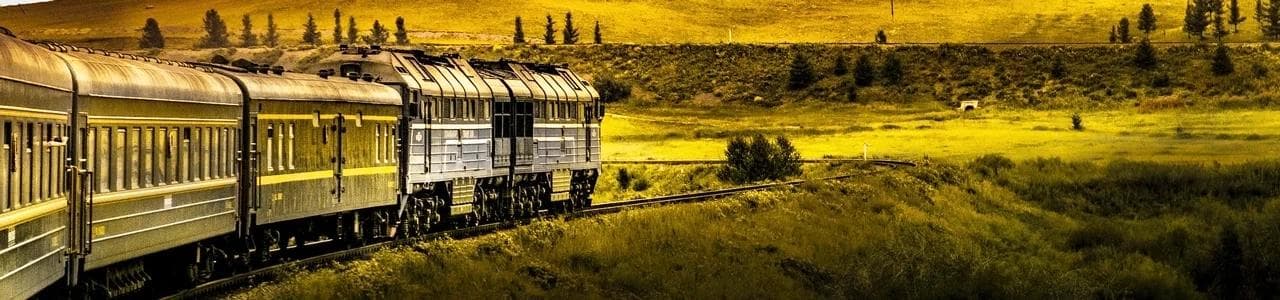
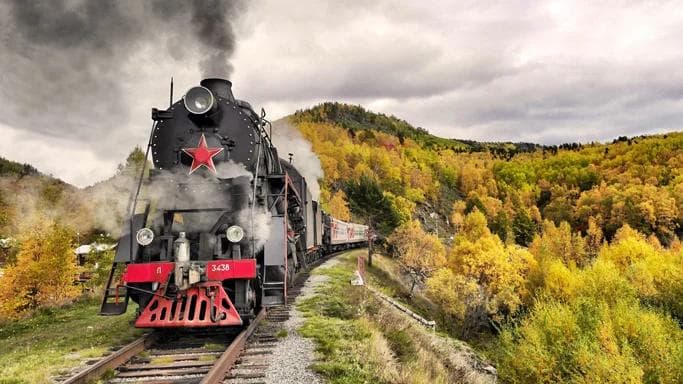
The Trans-Siberian Railway is considered as a geostrategic success evenly matched to the building of the Panama channel. The railway is featured in the Guinness Book of Records for its total length, the number of stations and for the fastest pace of construction, taking only 26 years to complete. By its main route, passengers can travel 9,289 km from Moscow to Vladivostok in just seven days. Its secondary branch, known as the Trans-Mongolian, follows an ancient tea-caravan route from Russia’s capital to Beijing.
How a railroad sparked a war?
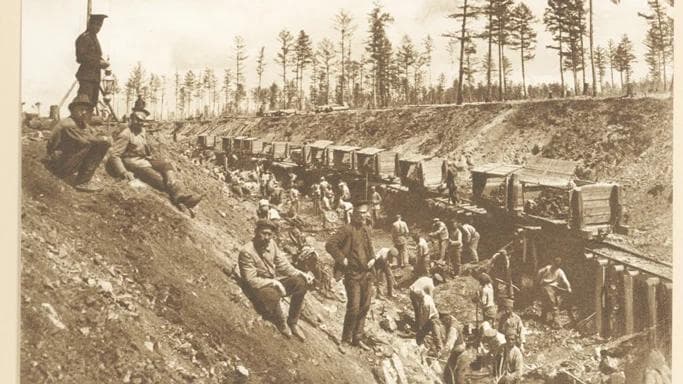
Before the railway was established, Russia had nothing to connect itself with East Asia or with the rich natural resources within Siberia. Sergei Witte, an ambitious minister of Imperial Russia, suggested that building a railroad would solve the problem. In his opinion, harvesting the natural resources treasured in Siberia was the quickest way to transform Russia into a rich industrial power. Witte’s idea was well-received by Czar Alexander III, who believed expanding the Russian population in Siberia would secure the country’s eastern border. But the railroad project was deemed impossible by many. The line would have to cross three of the world's greatest rivers, the world's largest lake, one of the world’s biggest forests and the Siberian permafrost through the world's harshest climate. When Russia's Committee of Communication pleaded that the idea was unreasonable, the emperor immediately dissolved the committee. In 1891, with Czar’s approval, Russia began the construction of the Trans-Siberian Railway. About 90,000 workers, made up of peasants, soldiers, and convicts, were transferred to commence construction. This massive deportation created a series of new towns and settlements in the uninhabited areas of Siberia.
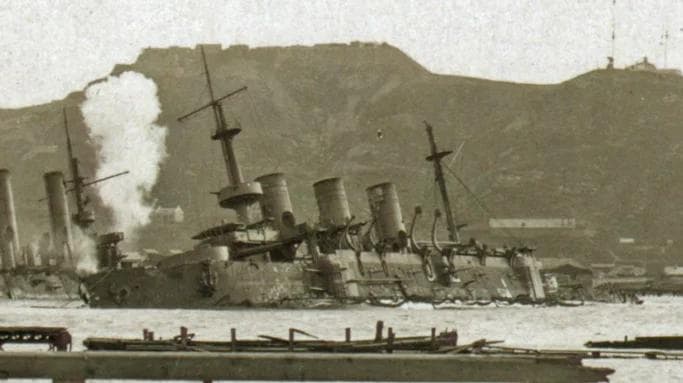
In February 1904, the war finally kicked off when Japan launched a surprise attack on Russian ships stationed at Port Arthur, a naval base in Manchuria. The incomplete state of the railway made it impossible for Moscow to send more troops and material, thereby enabling the Japanese to overpower the Russian army. By the end of the year, the Japanese navy had sunk every single ship in Russia’s Pacific fleet. In January 1905, General Anatoly Stessel, commander of the Port Arthur garrison, had opted to surrender, considering that the harbor was not worth defending anymore. The decision surprised both the Japanese and Stessel’s superiors in Moscow. However, to be fair if one considers the fact that merely 20 percent of the port’s fortification had been completed when the Japanese first launched their attack, resisting a siege for almost 11 months was a miracle. Stessel was later convicted of treason and sentenced to death, though he was eventually pardoned.
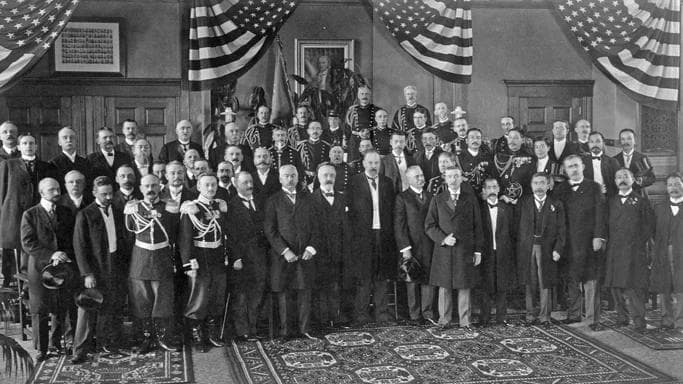
When Russia’s Baltic Fleet finally arrived as reinforcements in May 1905 after sailing about 37,000 km — they had no choice other than navigating the Sea of Japan to get to Vladivostok with the surrender of Port Arthur’s. The reinforcements were sailing at night to avoid being discovered by the Japanese, but they soon got detected when one of their ships foolishly turned on their lights in the dark. The Japanese navy immediately engaged in battle. In about a day’s time, the Russians had lost eight battleships and more than 5,000 men, forcing Russia to seek peace. In September 1905, the fighting ended with the Treaty of Portsmouth, mediated by U.S. President Theodore Roosevelt, who was later awarded the Nobel Peace Prize for his role in the talks.
How the Russo-Japanese War impacted world history?
Although the war was a mortifying defeat for Russians, Japan’s victory had come at a severe cost. The country’s treasuries were almost empty. Hence, Japan did not have the power to negotiate, allowing Roosevelt to side with Czar Nicholas in his refusal to pay war reparations in the Treaty of Portsmouth. While Russia turned over Port Arthur and Manchuria altogether to the Japanese, they successfully kept the northern half of Sakhalin Island in the Pacific Ocean. The Japanese felt cheated by the Americans. For days, anti-American riot, swelling up to 30,000 individuals, ensued in Tokyo. Even during the lead-up to World War II, the Japanese kept criticizing America’s role in Asian affairs. Still, as Russians had left Manchuria and recognized the Japanese control of the Korean peninsula, Japan managed to emerge as a superpower in East Asia. Within just five years, the Empire of Japan annexed Korea, an event that had far-reaching impacts during and after World War II and all the way to our very days. Japanese imperial growth, of course, created intense tensions with the US, who saw the new Asian power as a threat to its own ambitions. Meanwhile, the humiliating defeat in the Russo-Japanese War left the Russian Empire demoralized and fueled the growing anger at the disastrous policies of Czar Nicholas II, giving rise to the political opposition which then resulted in the abolishment of the monarchy during the October revolution of 1917. The Trans-Siberian railroad, which was supposed to start a new era of Russia, gave rise to a completely different empire while aiding in the downfall of the Russian Empire.


