
The plague that changed the world
The plague that changed the world
Early morning, November 1347, Alfano Damiani woke up to the sound of Alasia, his 5 years old daughter’s heavy coughs. He gushed through the door, seeing her struggling for every breath, barely alive. He took to the streets of Sicily screaming aiuto, aiuto, only to find dozens of others hysterically running the streets, in hope for any assistance they could get. Horrified, Alfano ran back in only to see Alasia taking her last breath before she closed her eyes. Forever.
The Italian historian Agnolo di Tura would later write:
Father abandoned child, wife husband, one brother another; for this illness seemed to strike through the breath and sight. And so they died. And none could be found to bury the dead for money or friendship. Members of a household brought their dead to a ditch as best they could, without priest, without divine offices ... great pits were dug and piled deep with the multitude of dead. And they died by the hundreds both day and night ... And as soon as those ditches were filled more were dug ... And I, Agnolo di Tura ... buried my five children with my own hands. And there were also those who were so sparsely covered with earth that the dogs dragged them forth and devoured many bodies throughout the city. There was no one who wept for any death, for all awaited death. And so many died that all believed it was the end of the world.
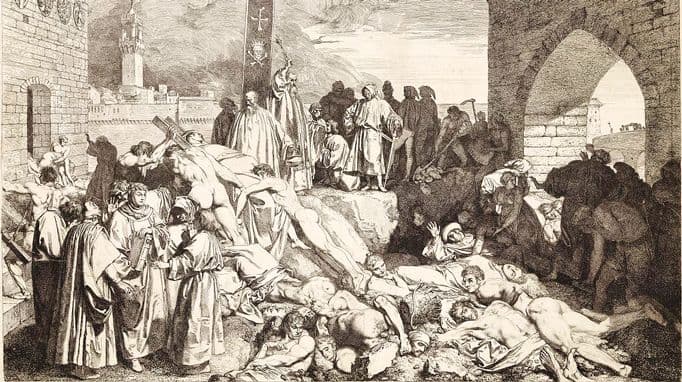
Florence, Italy (1348)
The Black Death, the bubonic plague that killed approximately 100 million people in the 14th century, was one of the deadliest and outspread pandemics in human history. Although its name is commonly associated with Europe, the Black Death had started in China, where people occasionally contract the disease to this day. Although the record of the pandemic in Asia is not so well documented, it does state in the History of Ming that the first wave of the plague hit China in 1344, three years prior to its outbreak in Europe.
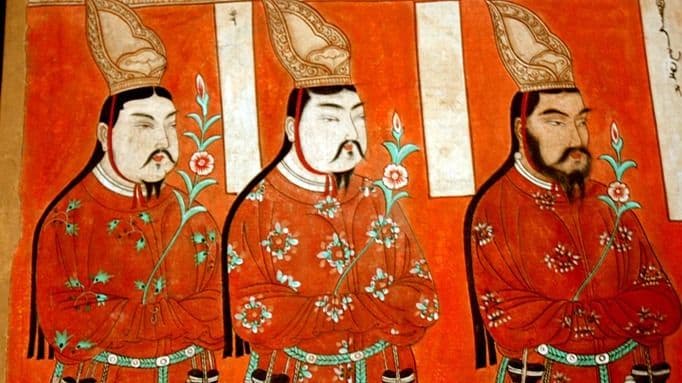
It all began during a period when the Mongols had ruled China under the Yuan Dynasty. From the late 1340s onwards, people in the countryside suffered from frequent natural disasters such as droughts, floods, and the resulting poverty. From this great famine, a plague was born. Millions of people died in Hebei Province alone. The spread of disease and trade went side by side. The fleas that carried the deadly bacterium known as Yersinia pestis, were transferred by the rats across the major trading route of the Silk Road, infesting anyone on its way and eventually reaching Crimea where it traveled to mainland Europe via merchant ships. By the time the ships arrived at their destinations, the crew who were fully afflicted by the disease, introduced death to their families and friends. In this fashion, the plague made its way to the Middle East and Africa. Approximately half of China’s population were perished by Black Death, while Europe’s went down by a third and Africa by an eighth.
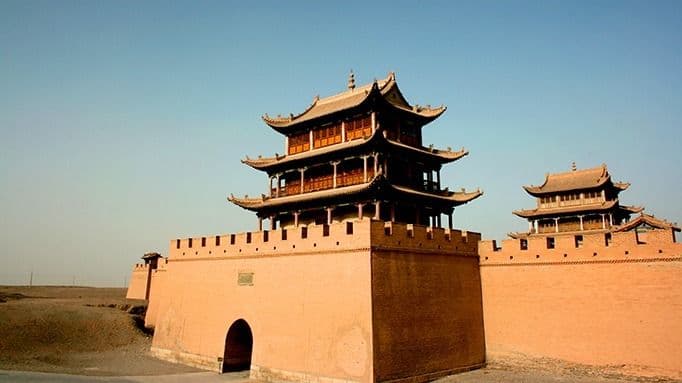
Jiayuguan fort at the beginning of the Silk Road
In the 14th century, societies had no precise information about the exact cause of the bubonic plague or effective treatments against it. Containing the disease seemed nearly impossible. Fleeing was the only preventative measure available at the time. It was common for a whole town and cities to become deserted. The fugitives took the Black Death with them and thus the disease spread even further. After infection, one usually gets flu-like symptoms and experiences painful, swollen lymph glands, called buboes. The buboes are red at first but soon turn black, from which the name ‘Black Death’ derived from. Scholars worked day and night to find a cure. On the Pope’s orders, anatomical examinations were carried out. When the corpses were opened, all victims were found to have infected lungs. All existing medications were practically useless. While the poor had resorted to traditional herbal remedies and witchcraft to heal their illnesses, the rich paid doctors to pierce the buboes, the most popular therapy which was adopted after some patients whose buboes cut open had recovered. The traditional procedure of bleeding, where the veins running to the heart are cut, was also used, but it mostly weakened the patient and quickened the ensuing death. Other absurd cures people attempted include sitting in sewers and drinking urine. Many thought the calamity was a punishment for their sins and paraded through the streets whipping themselves so that God might forgive them.

Traditional herbs & spices sold at a market in Xinjiang, China
Eventually, people realized that quarantine or self-isolation was the only way to halt the contamination. Strict fines were applied against the movement of people. Guards were placed at the city’s gates to prevent travelers from entering or leaving. Suspected vessels and travelers remained in isolation for 40 days before they could enter the city. Little did they know that the rats, or actually, the fleas in their fur, which spread freely from village to village, were the main source of the disease. Most patients died three to ten days after the initial infection. Paris was said to have 800 dead each day at its peak. The death tolls were so over the roof in some places that the bodies were often left lying where they died, without a workforce to bury them.
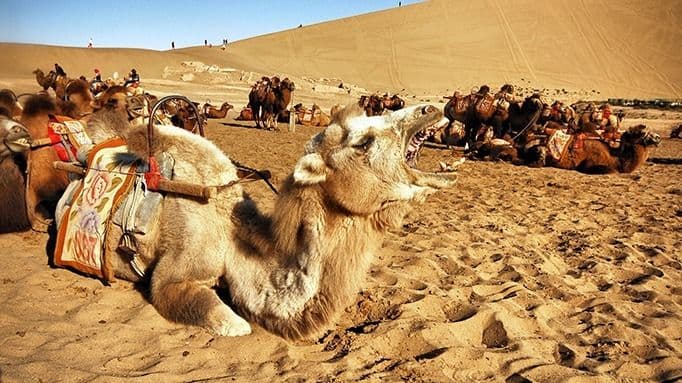
Furry Bactrian camels used for the Silk Road trade
The notorious Black Death had faded by the 1350s, but it wasn’t entirely gone. It only “ended’ because such diseases have a given lifespan. Due to the severity of the disease, the bacterium that requires victims to reproduce had simply run out of victims. The plague thus recurred every 20 years, troubling Europe and the Mediterranean until the 17th century. As for Asia, in the 19th century, bubonic plague occurred once again in the Yunnan province of China. The outbreak made its way to Hong Kong, a former British colony, from where it spread to other parts of Asia and the United States.
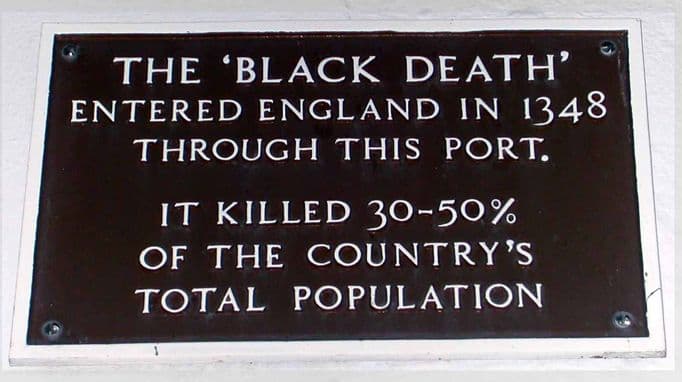
Massive loss of population had a huge aftermath in Europe that changed the way of life for good. The consequences were so severe that in many places, the social structure had completely broken down, diminishing the nobility's hold over the lower classes. Before the Black Death, Europe suffered from overpopulation, which reduced wages for peasants and enabled feudal lords to flourish. Once laborers became scarcer, they were able to demand higher salaries. High labor costs caused regimes to impose controls on wages, setting off numerous rebellions. Women gained certain rights of property ownership they had not had before the plague. In some parts of England, women who had lost their husbands were approved to keep his land until they remarried or even hold the property after remarrying. The fear and confusion caused by the plague also fueled hatred against Jews, Romani, and other minorities since the public had no medical knowledge of how the plague had spread. In the Strasbourg massacre of February 1349, about 2000 Jews were murdered. Constant attacks and massacres of the Jews led thousands to escape to Poland, where they received a warm welcome from King Casimir the Great. The impact of the Black Death continued for the following centuries and set the stage for the end of feudalism in Europe.
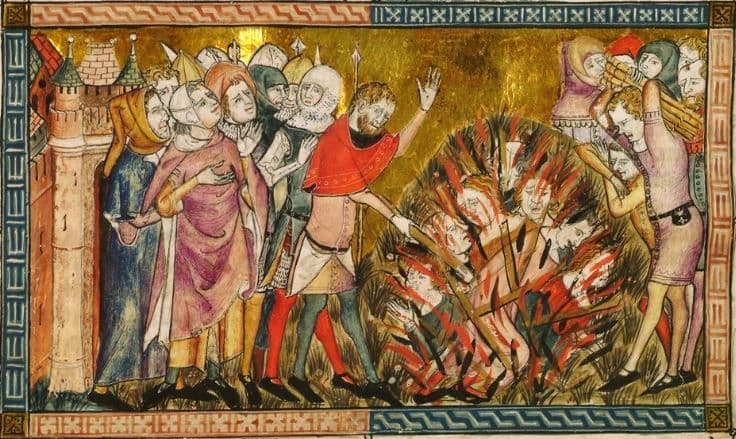
Jews being burned at the stake in 1349
The most chronological effect of the Black Death in Asia was that it aided in the collapse of the Mongol Empire, the largest contiguous land empire in history. Mongolian administrations from the Golden Horde in Russia to the Yuan Dynasty in China got weakened due to the incalculable human loss and panic caused by the plague, while the last legitimate Mongol ruler of the Il Khanate Empire in the Middle East died of the disease with all six of his sons. Interestingly, Zhu Yuanzhang, the leader of the Red Turban Rebellion who had overthrown the Mongol regime in China, became homeless when all his family members died of the plague. As a result, he had to flee the disease by begging as a traveling monk, during which period he joined a resistance army against the Mongols and became a leading figure in the revolutionary group. He ultimately captured the entire country and founded the Ming Dynasty in 1368. Many historians still argue that if it had not been for the Black Death, the Mongols’ Yuan Dynasty would have lasted much longer. There are no records of serious corruption, external invasions, land annexations, or even large-scale famines during the era of the Mongol Empire before the plague. For us, it is hard to imagine what China and the world would have become under a prolonged Mongol rule. In the end, a dynasty, forged on horseback by Genghis Khan, was brought down by what it built up, trade. When Mongols prospered, they provided security on trade routes and helped merchants to trade safer than ever along the Silk Road. The expansion of trade brought many benefits, such as increasing access to products and distributing knowledge. However, it also allowed this deadly infection to spread like wildfire from its origin in western China. Even though the bubonic plague had first occurred far back in the 6th century in Byzantium Empire, the outbreak had not come close to the damage it had caused in the medieval period, proving that the greater destruction occurred because the countries were much more interconnected with each other.
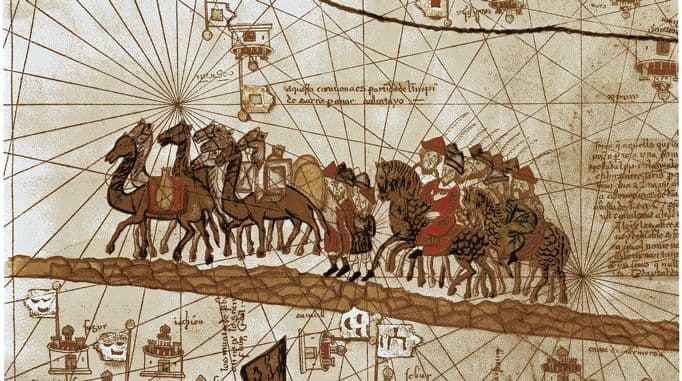
Camel caravan in the era of the Mongol Empire
The story of Black Death can teach us about the possible outcomes that might come from the pandemic of COVID-19 in our modern world. Today, we can detect new viruses, acquire reliable tests and develop vaccines. Yet, the only way to avoid the spread of infectious diseases remains to restrict movement. A hatred against Asians driven by a coronavirus, just as how our predecessors despised certain ethnic groups back then, shows us that we had not improved our humanity as much as we did our technology. With stock prices falling, companies, under pressure to maintain businesses, are taking desperate measures such as lowering payroll and decreasing the number for employees. A fundamental concern about the coronavirus situation is whether it will become a new turning point for our capitalist economy, inspiring a social and economic change that we cannot even think of. The last chapter of the Coronavirus crisis is yet to be written, but these are times where we should take advantage over modern globalization, join forces and combat the threat together, in a place where globalization has brought this fearsome virus to our doorstep.


