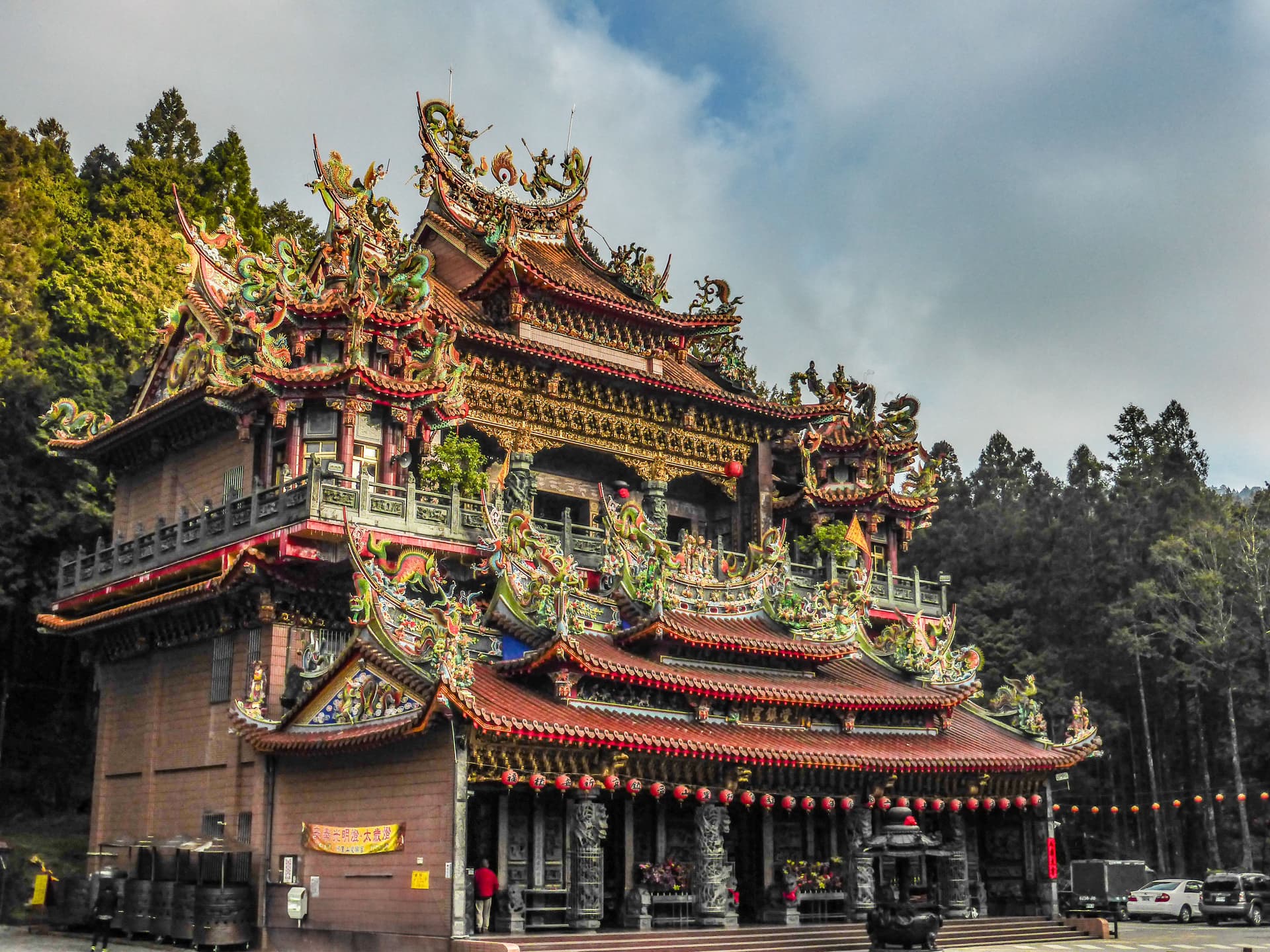
Taiwan Travel Guide
BRIEF INTRODUCTION
Taiwan, officially the Republic of China (ROC), occupies a unique place on the world stage, with an international status that is complex and nuanced. While the island has long thrived as an economic powerhouse, geopolitical tensions have shaped how the world recognizes, and sometimes sidesteps, Taiwan’s sovereignty. This delicate balancing act means that very few countries maintain formal embassies in Taipei, as they navigate a diplomatic tightrope heavily influenced by Taiwan’s powerful neighbor, the People’s Republic of China (PRC).
To clarify, Taiwan is the name of the island making up roughly 99% of the ROC’s territory. The distinction between Taiwan (ROC) and mainland China (PRC) underpins much of the region’s modern political and cultural identity. This duality has deep historical roots, stretching back centuries and shaped by waves of migration, colonization, and conflict.
PRACTICAL INFORMATION
Visa and entry requirements
Taiwan offers a warm, uncomplicated welcome to tourists from around the world, with visa-free entry or visa-on-arrival options that make planning your journey simple.
Visitors from North America, most of Europe, the UK, Australia, New Zealand, and several Asian countries may enter Taiwan visa-free for stays of up to 90 days. Most travelers are required to complete the Taiwan Arrival Card (ETA) online before arrival. Visa policies and ETA requirements vary by nationality, so travelers should confirm current rules before planning their trip. Check the official requirements on the National Immigration Agency and the Bureau of Consular Affairs websites.
To ensure smooth entry:
- Your passport must be valid for at least six months beyond departure
- At least three blank pages for immigration stamps
- Proof of onward or return travel
- Proof of sufficient funds may be requested
Medical record and liability release: All travelers must complete and sign our trip application form, which includes the medical record and liability release.
This information is accurate as of June 2025. For the most current and reliable updates, please refer to the official website and confirm the details before your departure.
Electricity
Taiwan operates at 110 volts at 60 Hz, the same standard as in North America. The plug types are typically Type A (two flat parallel pins) and occasionally Type B (two flat pins with a grounding pin). Travelers from countries using different voltage standards, such as Europe or most of Asia, will likely need a voltage converter for high-powered appliances, in addition to a plug adaptor.
Most mobile device chargers, laptops, and camera gear are dual voltage (100–240V) and will only require a universal plug adapter. However, always double-check your device’s voltage rating before using it to avoid damage.
Power outages are rare, and the electrical infrastructure in cities and towns is reliable. In remote areas or mountain lodges, access to outlets may be limited, so travelers are encouraged to bring a portable power bank for convenience, especially on photography-heavy days.

Internet and SIM cards
Taiwan offers fast and reliable internet across the island, with free Wi-Fi in most hotels, cafés, airports, and major city areas. Travelers can purchase a local SIM card at the airport (passport required) from providers like Chunghwa Telecom, Taiwan Mobile, or FarEasTone, with unlimited data plans ranging from USD 10 to 30 for 5 to 30 days.
Another increasingly popular option is the e-SIM (electronic SIM). If your phone supports it (most modern smartphones do), you can purchase and install the virtual SIM before departure, so your phone connects automatically upon landing. Coverage is strong even in most rural and mountainous regions, allowing easy connectivity throughout your trip. However, in extremely remote areas or on some mountain trails, signal strength may weaken, leading to occasional connectivity interruptions.
Note: If using a local SIM, your home-country number will be inactive, but WhatsApp and similar apps remain functional as long as account settings aren’t changed.
Currency and Money
The New Taiwan Dollar (TWD) is the official currency.
Please check the USD/TWD rate here.
As of June 2025:
- 1 USD ≈ 29.6 TWD
- 1 EUR ≈ 34.2 TWD
Cash remains king at markets, small vendors, and rural locations, whereas credit cards, predominantly Visa and Mastercard, are widely accepted in hotels, restaurants, and shopping centers across urban areas. International ATMs are readily available in banks, convenience stores like 7-Eleven, and post offices, often accepting global debit and credit cards.
IMPORTANT
If you bring foreign currency notes (USD or EUR), ensure the bills are new, clean, and free from marks or tears. For US dollars, bills issued before 2006 are often not accepted due to counterfeiting concerns. Larger denominations, such as USD 100 or EUR 100, are generally easier to exchange and offer better rates.
Tips (gratuities)
Unlike many Western destinations, Taiwan does not have a tipping culture. Service charges are typically included in bills, particularly in hotels and upscale restaurants, so there’s no expectation for additional gratuity. Taxi drivers, waitstaff at casual eateries, and hotel staff do not anticipate tips and will not take offense if none are offered.
However, travelers who receive exceptional service may certainly offer a small token of appreciation, such as:
- Guide: US$10 per person, per day
- Driver: US$3 per person, per day
- Porter: US$3 per service
While tipping won’t make or break the experience, a warm thank-you and respectful demeanor go a long way in showing appreciation for Taiwan’s attentive, professional service culture.
Personal Expenses
Before your trip, please review your proposal carefully to understand what is included in your package and what is not. If not sure, contact us. Travel in Taiwan offers an excellent balance between comfort and cost, making it a rewarding destination. Expect to spend USD 35–60 per day per person, depending on lifestyle, dining choices, and shopping habits. Here's a general breakdown:
- Meals Beyond Breakfast: Lunches at local eateries average USD 10-15, while dinner at mid-range restaurants may range from USD 20-40. Upscale dining is also available and priced more modestly than in Japan or Korea.
- Beverages & Snacks: Bubble tea, street snacks, and café visits cost USD 5–10 per day.
- Laundry, Toiletries & Incidentals: Most hotels offer laundry services or self-service options for a fee. Pharmacies and convenience stores like 7-Eleven and FamilyMart are ubiquitous and well-stocked.
While Taiwan’s retail grocery landscape is dominated by local and regional brands, several international supermarket and convenience store chains operate across the island, catering to expatriates and travelers seeking familiar products.
Key examples include:
- Supermarkets & Hypermarkets
- Carrefour (French; major presence in urban and suburban areas)
- Costco (U.S.; membership required, large warehouse format)
- RT-Mart (Taiwanese-Chinese joint venture, stocks imported goods)
- Convenience Stores with International Reach
- 7-Eleven (Japanese-origin; extensive nationwide network)
- FamilyMart (Japanese-origin; widespread presence)
- Specialty Import Retailers
- Jason’s Market Place (focus on imported food, wines, and specialty items; primarily in upscale malls)
- CitySuper (premium supermarket with extensive international product range; located in major cities)
Health
We are not authorized to provide medical advice. Please consult your doctor before your trip about vaccinations or precautions. If you take regular medication, bring enough for the entire trip, as some medicines are hard to find outside of your country. Always carry medications in your hand luggage, not checked baggage.
Medical record and liability release: All travelers must complete and sign a trip application form, which includes these documents.
Healthcare in Taiwan is supported by a well-developed healthcare system that generally meets international standards, though access and service quality are better in larger cities. In Taipei, Taichung, and Kaohsiung, hospitals and clinics are modern and well-equipped, staffed by qualified professionals, many of whom are trained abroad and can communicate in English. Pharmacies are widespread and reliable, but in smaller towns or rural areas, facilities may be more limited. No vaccinations are required for entry, but travelers are advised to remain current with routine immunizations such as Tetanus-diphtheria, Hepatitis A and B, and seasonal influenza. For longer or rural travel, Typhoid and Japanese Encephalitis may also be considered. Health risks are relatively low, though jet lag, food sensitivities, insect bites, and heat-related issues can affect even experienced travelers. Carrying a small travel health kit with basic medicines, such as pain relievers, antihistamines, and oral rehydration salts, is recommended. While Taiwan offers a generally safe health environment, comprehensive travel insurance remains essential.
Travel Health Insurance
Valid travel insurance is mandatory for all travelers. Your policy must cover medical evacuation, including emergency air transport back to your home country.
Carry both printed and digital copies of your insurance certificate, along with your policy number and your insurer’s 24/7 emergency contact details. If anything unexpected happens during your trip, our team and local partners will assist where possible, including helping you communicate with medical staff and your insurance company.
While Taiwan’s healthcare system is modern and relatively affordable, foreign visitors are not covered by the National Health Insurance program, so all medical expenses must be paid out of pocket. In cases of hospitalization or specialized treatment, costs can increase quickly, making comprehensive insurance especially important when traveling outside major cities or into mountainous regions.
ACCOMMODATIONS
Taiwan offers a wide range of accommodations, from simple village homestays where you sleep on thin mattresses in shared family spaces, to luxurious resorts. In major cities and near key tourist sites, options range from guesthouses to high-end hotels. Unless otherwise requested, we typically reserve four-star hotels. When a four-star option is unavailable, we select the next-best option, often a three-star property or, occasionally, a well-kept guesthouse or homestay.
Standard hotel check-in is at 3 PM, and check-out is at 11 AM. Many hotels allow early check-in if rooms are available, but to guarantee this, we recommend arranging it in advance; supplements may apply. For late check-outs, it's best to inquire with the hotel reception the night before departure, though many properties offer a 2–4-hour grace period. If you're considering a triple room, be aware that few hotels in Taiwan offer proper triple rooms. Most offer a double bed with a rollaway, or a twin room with a fold-out bed. These setups may feel cramped, and the extra bed can be uncomfortable. We can book a triple room if required, but we recommend considering these limitations.
When selecting accommodations, we consider location, service standards, renovation history, booking flexibility, and value. We also prioritize practical details such as breakfast quality, room cleanliness, and service responsiveness. Hotel standards can change over time, so we greatly value your feedback to help keep our recommendations accurate and up to date.
TRANSPORTATION AND TRAVEL
Taiwan’s transportation infrastructure is modern, reliable, and generally tourist-friendly, allowing efficient travel across the island. The High-Speed Rail (HSR) runs along the western corridor, linking Taipei in the north to Kaohsiung in the south in roughly two hours. Urban metro systems in Taipei, Kaohsiung, and Taichung are clean, air-conditioned, and feature multilingual signage, making them ideal for daily commuting or short city trips. Regional trains, intercity coaches, and buses serve smaller towns and scenic areas, though schedules may be less frequent outside major routes. Taxis are abundant and relatively affordable, but English-speaking drivers are uncommon; carrying destination names in Chinese characters is strongly recommended. Self-driving is possible but requires confidence in navigating dense traffic, complex intersections, and signage largely in Mandarin.
NOTE: If you are traveling with heavy or multiple pieces of luggage and your itinerary includes train travel, we recommend arranging luggage transfer in advance. Luggage space on trains is limited, and handling large bags can be inconvenient. Please refer to your trip proposal, and contact us if you would like us to arrange separate luggage delivery for an additional fee, so you can travel comfortably and hands-free.
FLIGHTS AND BAGGAGE
Taiwan is well-connected to major international and regional destinations, making it a convenient entry point to Asia.
For International flights, Taiwan’s primary gateway is Taoyuan International Airport (TPE) near Taipei, with a smaller number of international routes served via Kaohsiung International Airport (KHH) in the south. Direct flights link Taiwan to North America, Europe, Australia, and most major Asian hubs, including Bangkok, Seoul, Tokyo, Hong Kong, and Singapore. Flights to and from Taiwan are known for reliability, clean airports, and efficient immigration procedures. Allow extra time when departing from TPE, as security and immigration can experience peak-hour delays.
Airlines typically follow standard international baggage rules, though specific allowances depend on your carrier and class of service. The exact information should be listed on your flight ticket. If anything is unclear, contact us for more information.
Below is a general guideline:
International flights:
- Checked baggage: 1 piece up to 20–23 kg (44–50 lbs)
- Carry-on: 1 piece up to 7–10 kg (15–22 lbs), plus a personal item (handbag, laptop)
Domestic Flights are not common for most Taiwan itineraries due to the efficiency of high-speed rail and well-developed road networks:
- Operated mostly to offshore islands (Penghu, Kinmen, Green Island, Orchid Island)
- Checked baggage: Typically, 10–15 kg (22–33 lbs)
- Carry-on: Around 5 kg (11 lbs)
Note: Overpacking is not necessary. Taiwan’s cities have everything from department stores to 24/7 convenience stores where essentials are readily available. If your itinerary includes highland areas like Alishan or Taroko, pack a warm layer and comfortable walking shoes.
Food
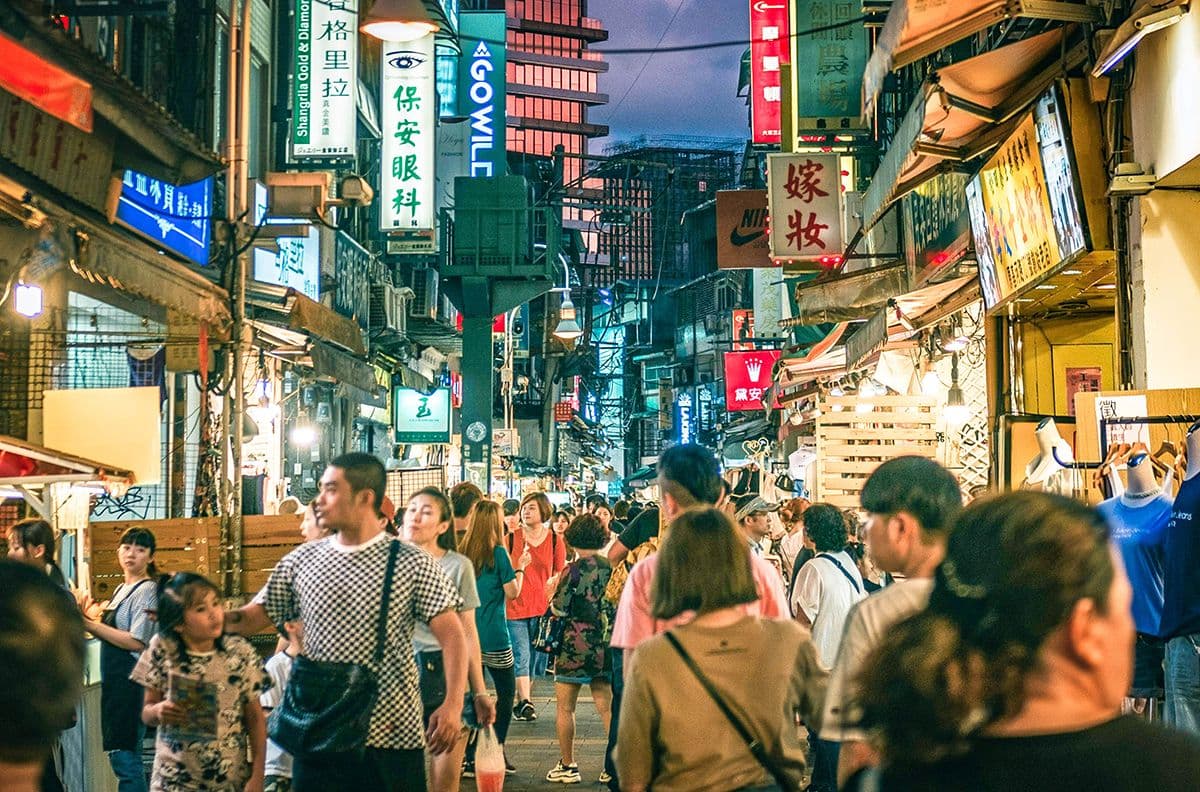
Taiwanese cuisine offers an extraordinary culinary adventure, with vibrant flavors, fresh ingredients, and a diversity that caters to many tastes. Western travelers will appreciate the abundance of familiar options alongside unique local dishes, high hygiene standards, clear menus with English or photos, and the accessibility of restaurants ranging from casual street food to upscale establishments. The island's night markets, such as Shilin in Taipei, Fengjia in Taichung, and Liuhe in Kaohsiung, offer an immersive culinary experience, with bustling stalls serving a variety of local delicacies, while vegetarian and mild-flavored options are widely available. However, some local dishes, particularly stinky tofu, fermented or very spicy items, and unusual organ meats, may challenge Western palates. Street food portions and preparation methods can also differ from Western expectations, and adventurous eaters should exercise caution with raw or undercooked items. Overall, Taiwan’s food scene is exciting and approachable, but travelers should be prepared for strong flavors and culinary surprises.
Taiwan’s signature dishes:
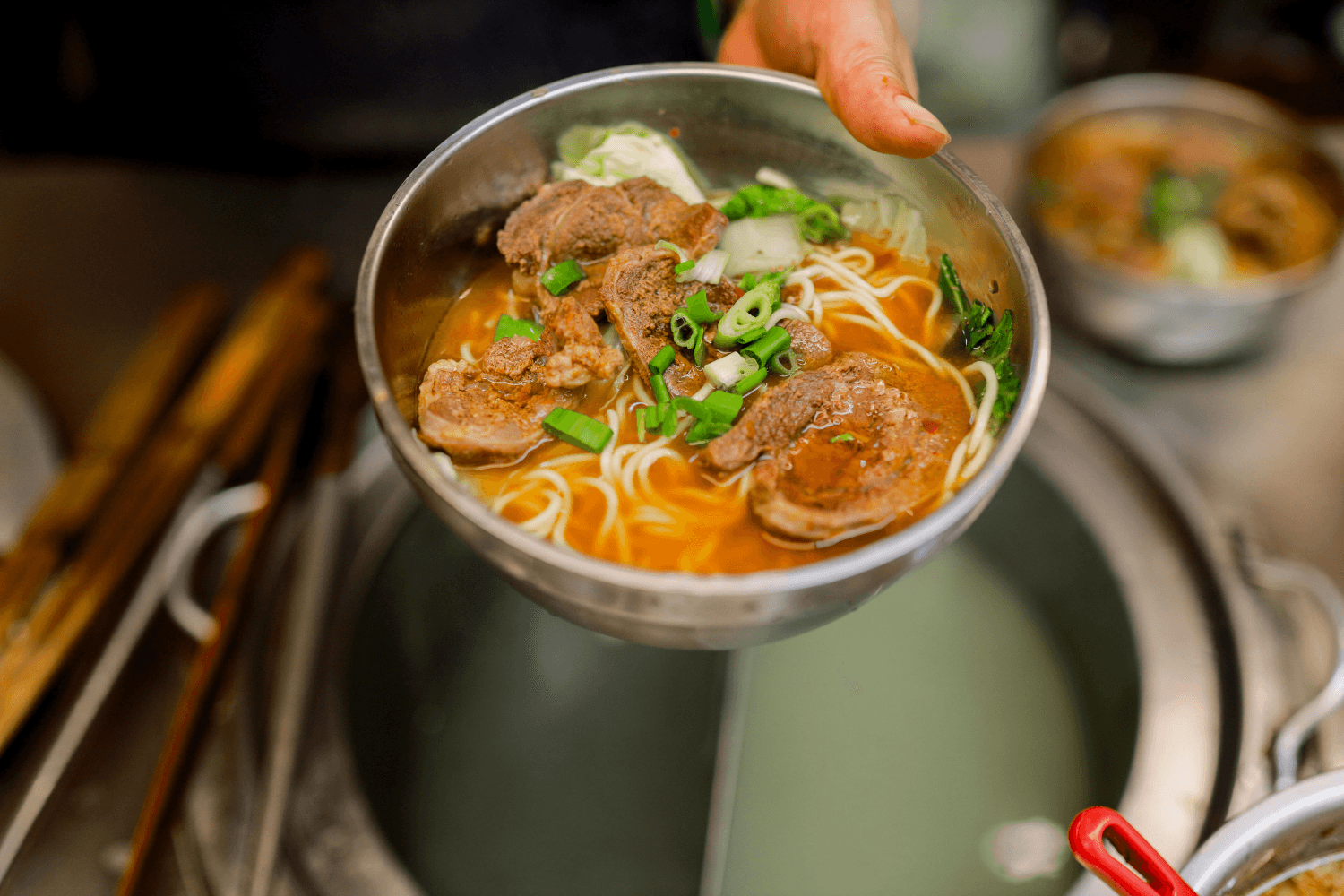
- Beef Noodle Soup (牛肉麵, Niúròu Miàn): Tender braised beef served with hand-pulled noodles in a savory, aromatic broth. Considered a national comfort food and is widely available in restaurants across the island.
- Gua Bao: A soft steamed bun filled with braised pork belly, pickled vegetables, fresh herbs, and crushed peanuts. A popular street-food snack and night-market staple.
- Oyster Omelet: A savory pancake made with fresh oysters, eggs, and sweet potato starch, served with a lightly sweet, tangy sauce. A quintessential night-market favorite.
- Lu Rou Fan: Minced pork braised in soy sauce and spices, served over steamed rice. Simple, hearty, and a common meal in local eateries.
- Bubble Tea: Taiwan’s iconic tea-based beverage with chewy tapioca pearls, offered in countless flavors and variations nationwide.
Cultural Etiquette & Modesty Norms
Taiwan offers a seamless travel experience thanks to its warm hospitality, social harmony, and cultural openness. Yet beneath the modern sheen of its cities lies a deeply rooted heritage shaped by Confucian values, Buddhist principles, and a strong sense of civic courtesy. Understanding a few local norms will enrich your experience and ensure respectful, graceful interaction with hosts and locals alike.
Interpersonal Etiquette
- Greetings are polite but low-key. A smile and a slight nod are perfectly acceptable for informal interactions. In formal settings, a light handshake is common, sometimes accompanied by a subtle bow of the head.
- Titles and last names are preferred in introductions (e.g., Mr. Chen, Ms. Lin). Avoid addressing people by their first name unless they invite you to do so.
- Respect for hierarchy is important, especially when engaging with elders or authority figures. Always greet the senior-most person in the room first.
Modesty & Behavior
- Public displays of affection are rare. Couples typically refrain from overt gestures like kissing or hugging in public, and travelers are advised to follow suit.
- Personal space is respected. Loud or boisterous behavior in public settings, especially in temples, on public transport, or in restaurants, is considered impolite.
- Saving face is central to Taiwanese social interactions. Avoid public criticism or direct confrontation. If any issue arises, please inform our guide or contact us, and we will assist in resolving it.
Dress Code
- Casual attire is widely acceptable, particularly in urban areas. However, modesty is still appreciated, especially when visiting religious sites or rural communities.
- When entering temples or shrines, wear clothing that covers shoulders and knees. Remove hats and sunglasses before entering the inner sanctum.
- Shoes should be removed when entering someone’s home or certain traditional guesthouses. Some temples may also request that shoes be removed before entering the inner halls.
Photography Etiquette
- Photography is welcome in most public spaces, but always ask before photographing people, particularly monks, temple staff, or market vendors.
- Flash photography may be restricted in temples, museums, or during performances. Check posted signs or ask your guide.
Conversation Norms
- Topics such as politics and cross-strait relations (Taiwan–China) can be sensitive. If the subject arises, approach it with respect and neutrality.
- Locals may ask questions about your nationality, job, or family life; this is seen as friendly curiosity rather than intrusion.
- Gestures such as pointing with a single finger or waving objects in someone’s face can be viewed as rude. Use an open hand when gesturing and avoid exaggerated movements.
Weather and Recommended Seasons
Taiwan’s climate is predominantly subtropical in the north and tropical in the south. Spring (March to May) and autumn (October to early December) offer the most pleasant conditions, with mild temperatures, lower humidity, and minimal rainfall, making them ideal for sightseeing and outdoor activities.
Summer months coincide with typhoon season (July to September), bringing heavy rains, strong winds, and occasional travel disruptions. Winters are mild in southern regions but cooler in the north, with mountain areas occasionally experiencing frost or light snow.
Travelers should pack accordingly and monitor weather forecasts during peak typhoon months.
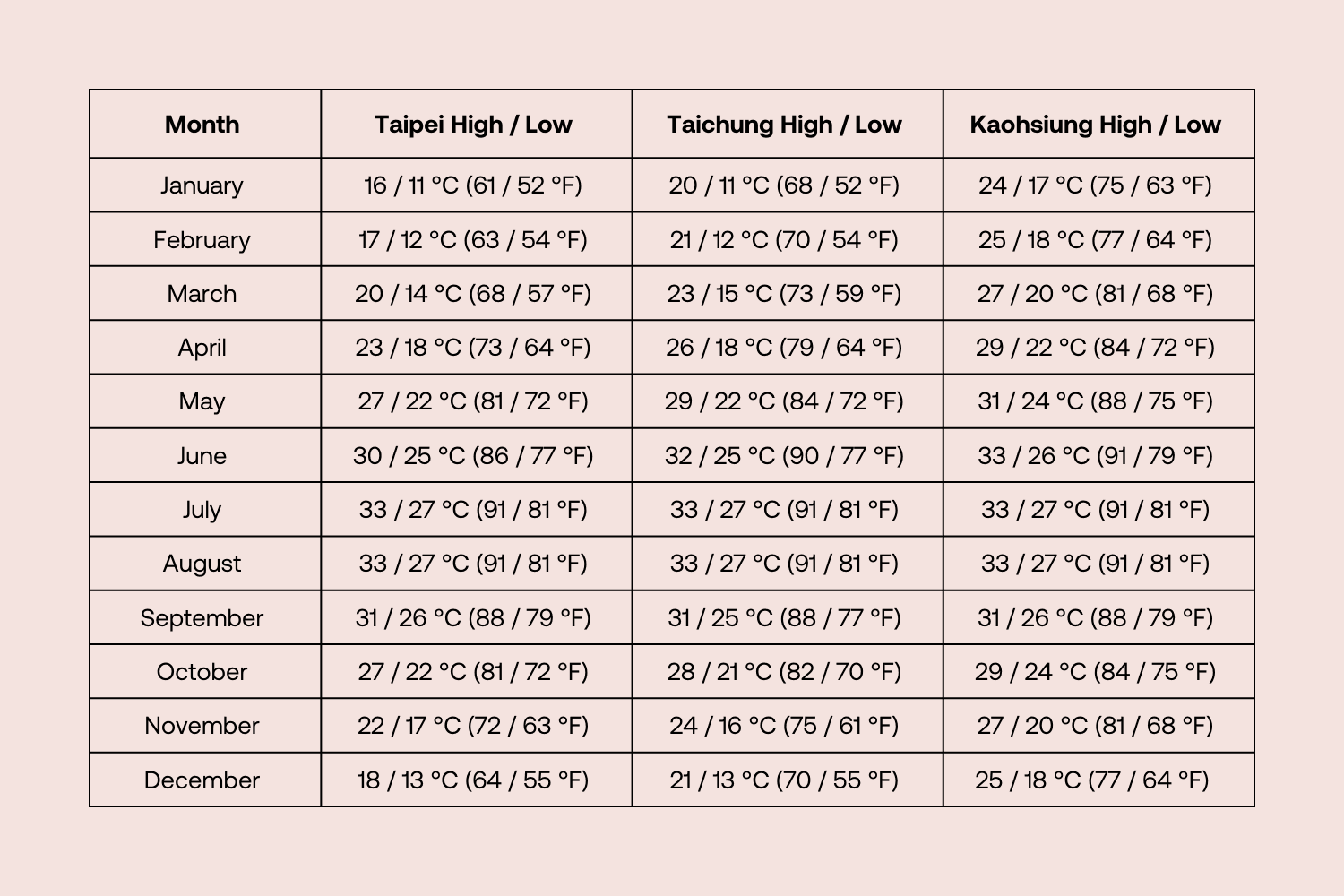
- Taipei (northern Taiwan) has a subtropical climate with mild winters and hot, humid summers.
- Taichung (central Taiwan) is slightly warmer and drier, with rainfall that is more moderate.
- Kaohsiung (southern Taiwan) is the warmest city year-round with a tropical climate and mild winters.
- Typhoon season typically runs from July to September, bringing heavy rain and strong winds.
- Winters are mild but can feel cooler due to humidity, especially in the north.
Recommended Packing List
Smart, versatile packing ensures both comfort and cultural respect while traveling through Taiwan. Here's what to include:
Essentials
- Travel insurance policy details (printed and digital)
- Local currency (TWD/New Taiwan Dollar) and backup credit/debit card
- International travel adapter (Taiwan: 110V, 60Hz; plug types A and B
- Unlocked smartphone + local SIM card/e-SIM installed/ or roaming enabled
Clothing (Layered for Flexibility)
- Lightweight tops (cotton, linen, moisture-wicking)
- Long-sleeve shirts for sun and cultural sensitivity
- Warm layer (fleece or insulated jacket, especially for autumn/spring travel)
- Waterproof jacket or windbreaker
- Comfortable walking shoes (terrain may vary)
- Sandals or slip-ons (for hotel or light walking)
- Modest attire for temples or rural visits (cover shoulders and knees)
- Smart-casual outfit for fine dining or cultural events
- Undergarments & sleepwear
- Sunhat or cap, scarf, and light gloves (in colder seasons)
Toiletries & Health
- Prescription medications (with original labels)
- Basic first-aid kit (pain relievers, motion sickness pills, etc.)
- Hand sanitizer, wet wipes, and toilet paper/tissues (public toilets may lack supplies)
- Sunscreen (SPF 30 or higher) and lip balm
- Bug repellent
- Travel-size toiletries (hotels may not provide Western brands)
- Reusable water bottle (hotels often provide filtered water)
- Travel pillow and eye mask for flights or long train rides
- Small travel laundry kit or laundry service allowance
History
Taiwan’s history stretches back over 6,000 years, rooted in the lives of Austronesian-speaking indigenous peoples whose maritime skills and complex social structures linked the island to the broader Pacific world. These communities cultivated diverse cultures, languages, and spiritual practices long before external powers arrived. In the early 17th century, Taiwan entered the orbit of global geopolitics as European ambitions reached its shores: the Spanish established a foothold in the north, while the Dutch controlled the south, naming the island “Formosa,” Portuguese for “beautiful island,” a label that would endure in Western maps and imagination.
In 1662, Ming loyalist Zheng Chenggong, better known as Koxinga, defeated the Dutch, establishing the short-lived Kingdom of Tungning and introducing significant Han Chinese migration and cultural influence. The Qing Dynasty formally annexed Taiwan in 1683, gradually consolidating administration, integrating the island into imperial China, and encouraging further migration from Fujian and Guangdong provinces. Over the following centuries, Han settlers blended with indigenous communities, creating a multi-layered society that balanced Chinese cultural norms with longstanding local traditions.
The late 19th century saw Taiwan caught between shifting empires. After the First Sino-Japanese War in 1895, the island briefly declared the Republic of Formosa, a fleeting assertion of local sovereignty, before coming under Japanese colonial rule. For fifty years, Japan imposed strict governance while introducing modern infrastructure, industrial development, and urban planning, yet indigenous and local communities often endured suppression and cultural marginalization. This period left a complex legacy, visible in Taiwan’s architecture, transportation networks, and approach to public hygiene.
Following Japan’s defeat in 1945, Taiwan reverted to the Republic of China, only for the Chinese Civil War to reshape its political future. In 1949, Chiang Kai-shek’s Kuomintang retreated to Taiwan after losing mainland China to the Communist Party, establishing a separate government, economy, and security apparatus. Over the subsequent decades, Taiwan underwent rapid economic transformation, emerging as a hub of industry, technology, and trade, while transitioning to a vibrant democracy in the late 20th century.
Today, Taiwan is a living tapestry of its layered history: indigenous heritage remains alive through music, art, and festivals; Chinese traditions persist in temples, cuisine, and social customs; and the imprint of Japanese colonialism is evident in urban planning, railways, and cultural institutions. Amid ongoing political complexity with the People’s Republic of China, Taiwan’s society remains resilient, culturally rich, and remarkably diverse, offering travelers a nuanced encounter with history that is both tangible and deeply human.
Religion
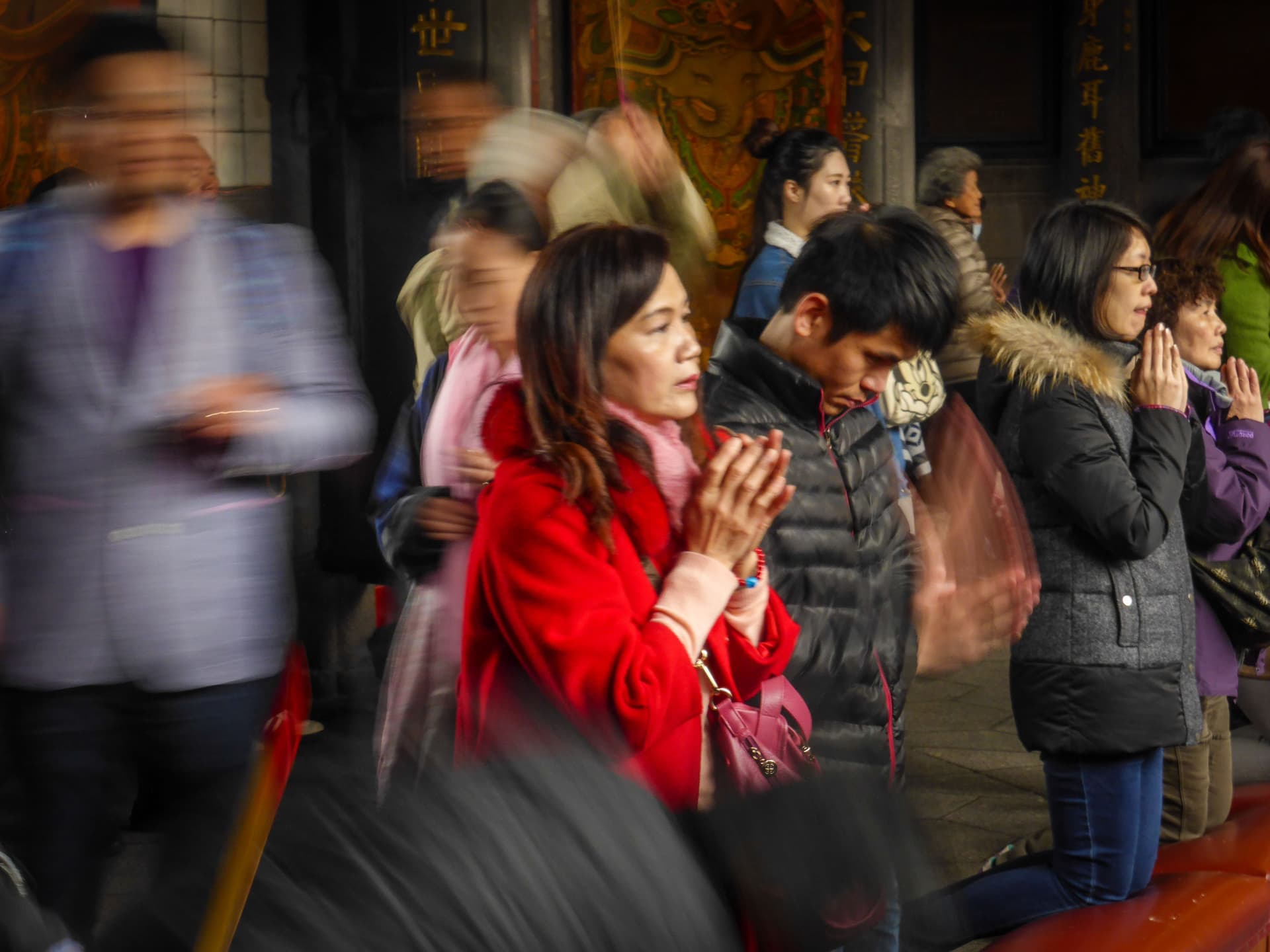
Religion in Taiwan is an eclectic fusion, deeply woven into daily life and public culture. The island is a crossroads where Buddhism, Taoism, Confucianism, and local folk religions intermingle seamlessly, creating a spiritual mosaic.
Buddhism in Taiwan primarily follows the Mahayana tradition, enriched by local interpretations and practices. Temples are ubiquitous, often colorful and elaborately decorated, serving not only as places of worship but also as community hubs that host festivals, art, and education.
Taoism, with its pantheon of gods and nature spirits, informs many traditional customs and rituals. Folk religion and ancestor worship permeate households, reinforcing filial piety and social cohesion. Incense burning, food offerings, and spirit mediums form visible threads in this spiritual fabric. Taiwan’s religious festivals are vibrant cultural showcases. The Lantern Festival, marking the Lunar New Year’s close, bathes cities in glowing orbs symbolizing hope and renewal. The Ghost Festival honors ancestral spirits with theatrical performances and elaborate ceremonies. These events provide travelers a window into the island’s connection between the material and spiritual worlds.
Indigenous spiritual traditions persist primarily in mountainous regions, though mainstream faiths often overshadow them. Their animistic beliefs emphasize harmony with nature, reverence for the ancestors, and ritual dance, offering an alternative spiritual rhythm to Taiwan’s urban pulse.
Geography
Taiwan is a dramatic island of contrasts, stretching approximately 394 kilometers (245 miles) from north to south and averaging 144 kilometers (90 miles) wide. Its compact size belies astonishing geographical diversity. Dominating the landscape is the Central Mountain Range, a spine of rugged peaks soaring above 3,900 meters (nearly 13,000 feet), including Yushan (Jade Mountain), 3,952 meters (12,966 feet), the highest point in East Asia. These mountains harbor ancient forests, endemic wildlife, and scenic trails coveted by hikers and nature lovers.
To the west lie the densely populated and fertile western plains, home to Taiwan’s bustling cities, agriculture, and industry. Here, sprawling rice paddies, tea plantations, and urban centers coexist in a striking mosaic. The eastern coast contrasts sharply: steep cliffs plunge into the Pacific Ocean, punctuated by natural wonders such as Taroko Gorge, a marble-walled canyon famed for its sheer beauty and adventurous hiking paths.
Taiwan’s climate shifts from subtropical in the north, with four distinct seasons, to tropical in the south, marked by warm temperatures year-round. The island experiences a rainy season from May to September, including typhoons, which can disrupt travel but also replenish the lush landscapes.
Its unique geography supports rich biodiversity, from tropical coral reefs off the southern coast to alpine ecosystems atop its highest peaks, making Taiwan a paradise for eco-tourists and wildlife enthusiasts.
Recommended Books
- All you need to know about. (2023): Jonas Hoffman Schmidt, Linda Amber Chambers
- Taipei - Tao Lin (2013): A modern novel reflecting the urban alienation of young Taipei residents.
- Green Island - Shawna Yang Ryan (2016): A sweeping story of political upheaval and family during Taiwan’s martial law era.
- Notes of a Crocodile - Qiu Miaojin (1994, English trans. 2017): A cult novel of LGBTQ+ identity in post-martial law Taipei.
- The Stolen Bicycle - Wu Ming-Yi (2017): A lyrical meditation on history, memory, and Taiwan’s changing landscape.
- Formosa Betrayed - George H. Kerr (1965): Classic firsthand account of Taiwan’s turbulent post-WWII years.
- My Enemy’s Cherry Tree - Wang Ting-Kuo (2019): A modern Taiwanese love story set against social change.
Recommended Movies
- Invisible Nation (2023). Vanessa Hope
- A City of Sadness (1989): Hou Hsiao-hsien’s masterpiece about the White Terror era.
- Yi Yi: A One and a Two (2000): A poignant family drama that captures the rhythm of modern Taiwanese life.
- Cape No. 7 (2008): A romantic drama that revived Taiwan’s film industry.
- Our Times (2015): A nostalgic coming-of-age story beloved across Asia.
REVIEWS
“We were a group of 8 (4 couples), travellingduring 13 days inall Taiwan, a trip which was organized byTrips@Asia. Our satisfaction was high due to thehigh level of organizing and the local guide, Joe Huang, which speaks in fluent English. The accommodation was invery good hotels. So, if you plan a visit in Taiwan, I should recommend youto choose Trips@Asia, managed by Ron Orenin order to ensure the success of your visit.”
- SHLOMO on Tripadvisor
“We've finishedfew days ago a comprehensive tourin Taiwan (13 days, 8 people) which was specially prepared for our group by Ron Oren, the owner & CEO of Trips@ Asia. Our requests were to be enriched with contents such as - museums, temples, culinary, etc. aswell wild nature that should be involved with intensive walking. Wereturned back excited!! For every aspect of the tour - places that had been chosen, hotels, some of them were quite unique & all the others highest grade, AC bus that had followed usfm the 1st day till the end, and an excellent tourist guide that have opened us a window to any aspects of Taiwan, we've requested him - history, policy, education, economic, family relationships etc. and experiencing the wild nature have widen our breathing & our soul. We came to Taiwan without knowledge or expectations& came back as lovers of Taiwan. All thosecouldn't be achieved withoutan excellent planning & execution by Ron Oren & his team.It's a 10 marks organized tour. No doubt,we'll meet Ron's tours in the future & we recommend all our friendswho're planning to visit South-Asia to getTrips@Asia service.”
- yishaiav2023 on TripAdvisor
“The 9-day trip to Taiwan was planned professionally, attentive to our needs (two couples of friends in a car with a guide) and pleasantly at all stages: in planning and during the trip. The planning was diverse in terms of culture, nature and culinary experiences and in terms of the combination of walking and driving (in doses that were right for us and considering the distances we covered). Our guide was excellent: a knowledgeable person who shared his knowledge with us while making sure not to overload on one side and not to deprive on the other. All in a pleasant and friendly manner. Even for the days we stayed outside of Taipei, we received excellent recommendations and useful instructions for comfortable conduct. We have no doubt that we will also use the company's services in the future.”
– ANAT on Google Reviews


