Cambodia Travel Guide
BRIEF INTRODUCTION
Cambodia is a land where ancient grandeur meets resilient spirit. At its heart stands the awe-inspiring Angkor Wat, one of the world’s most iconic temple complexes, but beyond the ruins, travelers discover a nation of profound beauty and grace. From the faded colonial facades of Phnom Penh to the floating villages on Tonlé Sap Lake, Cambodia offers a tapestry of contrasts: bustling markets, tranquil riversides, and rich cultural traditions shaped by both glory and hardship. Despite its turbulent past, the Cambodian people greet visitors with warmth, humility, and quiet pride. Whether wandering through centuries-old temples, savoring the rhythms of daily life, or reflecting on the country’s remarkable journey of renewal, traveling in Cambodia is not just a tour; it’s an invitation to connect with a culture as generous as it is unforgettable.
PRACTICAL INFORMATION
Visa and entry requirements
This information is accurate as of June 2025. For the most current and reliable updates, please refer to the official website and confirm the details prior to your departure.
Cambodia welcomes international travelers with a flexible visa policy that facilitates smooth entry while maintaining security. Visitors have two main options for obtaining a tourist visa:
- E-Visa (Type T): Apply online before arrival via Cambodia’s official e-Visa portal. The fee is USD 30, plus a USD 6 processing charge, and is valid for a single entry for up to 30 days within three months of issue. Using the e-Visa streamlines entry, allowing travelers to bypass longer border queues. Visit the E-Visa Website.
- Visa on Arrival (T-Class): Available at Phnom Penh, Siem Reap, and Sihanoukville international airports, as well as at major land border crossings. Travelers pay approximately USD 30 in cash for a single-entry visa. Those obtaining a visa upon arrival should bring two passport photos. Also, recommended to bring the exact amount in cash to avoid waiting for change.
NOTE: All travelers arriving by air must complete the Cambodia e-arrival card within 7 days of arrival, even if they hold an e-Visa. No ETA is required. Cambodia e-Arrival
All travelers must hold a passport valid for at least six months beyond the intended date of entry. Trip participants are required to complete and sign our application form, which includes a medical record and liability release.
The Cambodian government continues to enhance border procedures, including the gradual implementation of biometric checks at key points, balancing efficient tourism facilitation with regulatory compliance. Travelers should prepare all documents, including an e-Visa confirmation or the necessary cash for a visa on arrival, in advance to ensure a smooth entry process.
IMPORTANT
If your flight to Cambodia transits through Thailand, you must complete the Thailand Digital Arrival Card before travel. Foreigners are required to submit their arrival card information at least 3 days before their arrival date in Thailand. Submit the form online at https://tdac.immigration.go.th/arrival-card/#/home
ELECTRICITY
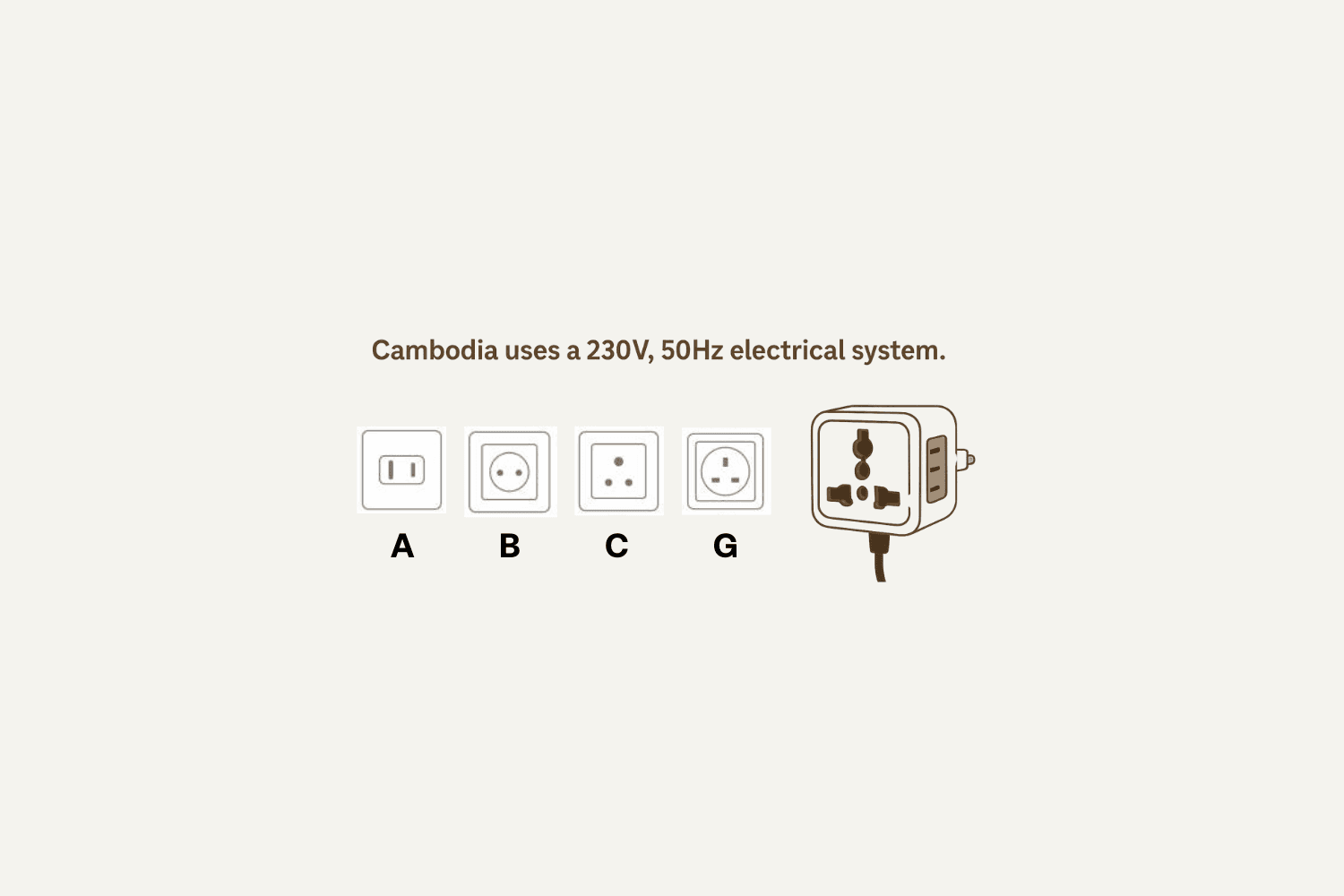
Cambodia uses a 230V, 50Hz electrical system.
Travelers should bring a universal travel adapter that supports multiple plug types, especially Types A (two flat pins), C (two round pins), and G (three rectangular pins), as these are the most commonly used. Because Cambodia’s voltage is 230V at 50Hz, if your devices are not dual-voltage (check the labels: usually “100-240V”), you may also need a voltage converter to avoid damage.
INTERNET AND SIM CARDS
Staying connected in Cambodia is straightforward, especially in major cities and tourist hubs. 4G coverage is strong and reliable across most regions, and 5G service is available in Phnom Penh, Siem Reap, and Sihanoukville, though coverage remains limited to central urban zones. Prepaid SIM cards from leading providers such as Smart, Metfone, and Cellcard are inexpensive, easy to obtain at airports, convenience stores, or authorized shops, and offer competitively priced data bundles suitable for email, navigation, and light media use. Another increasingly popular option is the E-SIM (electronic SIM). If your phone supports it (most modern smartphones do), you can purchase and install the virtual SIM before departure, so your phone connects automatically upon landing.
Wi-Fi is widely available in hotels, guesthouses, cafés, and restaurants in Phnom Penh, Siem Reap, and Sihanoukville. However, in rural areas, smaller towns, and islands, speeds may be slower, intermittent, or less reliable. For travelers venturing off the beaten path, carrying a local SIM card, eSIM, or portable hotspot is recommended to ensure uninterrupted connectivity.
Note: If using a local SIM, your home-country number will be inactive, but WhatsApp and similar apps remain functional as long as account settings aren’t changed.
CURRENCY AND MONEY
The official currency is the Cambodian Riel (KHR), but the US dollar is widely accepted, so changing to local Riel is not mandatory. Please check the USD=KHR rate here.
As of June 2025:
- 1 USD ≈ 4,014 KHR
- 1 EUR ≈ 4,623 KHR
Credit cards are accepted in hotels and larger businesses.
Accessing Cash: ATMs are plentiful in urban centers such as Phnom Penh and Siem Reap and dispense both US Dollars and riel. Credit cards are widely accepted in luxury hotels, upscale restaurants, and some larger shops. However, cash remains king in rural areas, markets, and local eateries, so it’s prudent to carry a reasonable amount of physical currency for flexibility.
IMPORTANT
If you bring foreign currency notes (USD or EUR), ensure the bills are new, clean, and free from marks or tears. For US dollars, bills issued before 2006 are often not accepted due to counterfeiting concerns. Larger denominations, such as USD 100 or EUR 100, are generally easier to exchange and offer better rates.
TIPS (GRATUITIES)
Providing a tip is not obligatory, but it is customary to show appreciation for the exceptional service rendered by professionals who support your journey in the tourism sector. Here are our recommendations for tipping:
- Guides (for a couple): USD 12 – USD 15 per couple per day
- Guides (for a group of 3–10 people): USD 7 – USD 10 per person per day
- Guides (for groups above 10): USD 5 – USD 7 per person per day
- Drivers (for a couple): USD 12 – USD 15 per couple per day
- Drivers (for a group of 3–10 people): USD 7 – USD 10 per person per day
- Drivers (for groups above 10): USD 5 – USD 7 per person per day
- Hotel Maid Service: USD 1 – USD 2 per day
- Porters: USD 1 – USD 2 per luggage
- Local Boat Transport: USD 2 – USD 3 per boat
- Overnight Cruise: USD 5 – USD 10 per night per traveler (covers all crew)
Ultimately, while tipping is not obligatory, it contributes meaningfully to the livelihoods of those who ensure your journey runs smoothly and is regarded as a mark of cultural respect and appreciation.
PERSONAL EXPENSES
Before your trip, please review your proposal carefully to understand what is included in your package and what is not. If you are not sure, please feel free to contact us.
Travelers mainly need money for souvenirs, extra food and drinks, communication, laundry, and other personal expenses. We recommend budgeting about $50 USD per person per day for it, but adjust based on your shopping habits or drink preferences.
Important Considerations:
- Communication: Costs for SIM cards, data plans, or international calls should be considered.
- Laundry: Most hotels offer laundry services, which may incur an extra charge.
International grocery store chains in Cambodia are primarily found in Phnom Penh and Siem Reap. Supermarkets such as Aeon Mall, Lucky Market, and Bayon Market offer a range of imported food and beverage products catering to expatriates and local residents. Convenience stores like Lucky 7 and 7-Eleven are expanding in urban areas but remain limited outside major cities. In rural regions, access to imported groceries is minimal. Hotels and upscale accommodations in tourist hubs may provide a modest selection of international products for guest convenience.
HEALTH
We are not authorized to provide medical advice. Please consult your doctor before your trip about vaccinations or precautions. If you take regular medication, bring enough for the entire trip, as some medicines are hard to find outside of your country. Always carry medications in your hand luggage, not checked baggage.
Medical record and liability release: All travelers must complete and sign a trip application form, which includes these documents.
Health conditions in Cambodia vary by region. While Phnom Penh and Siem Reap offer well-equipped hospitals and international clinics, medical facilities in rural or remote areas are limited, and severe cases often require evacuation to Thailand or Vietnam. Common health risks include mosquito-borne illnesses such as dengue fever and Japanese encephalitis, and, in certain areas, malaria, along with food and water-related diseases such as travelers’ diarrhea, hepatitis A, and typhoid. Heat exhaustion and dehydration are common concerns during the hot season, and air quality in urban centers may affect people with respiratory sensitivities. Rabies is present, particularly among stray dogs and monkeys, so bites and scratches must be treated promptly.
Standard vaccinations recommended include Hepatitis A and B, Typhoid, Tetanus, and routine childhood vaccines, with malaria prophylaxis advisable in forested border zones during the rainy season. To reduce risk, bottled or purified water should be consumed, mosquito protection measures should be strictly followed, and caution should be exercised with food hygiene, especially street food.
TRAVEL HEALTH INSURANCE
Valid travel insurance is mandatory for all travelers. Your policy must cover medical evacuation, including emergency air transport back to your home country.
Carry both printed and digital copies of your insurance certificate, along with your policy number and your insurer’s 24/7 emergency contact details. If anything unexpected happens during your trip, our team and local partners will assist where possible, including helping you communicate with medical staff and your insurance company.
Given Cambodia’s varied healthcare infrastructure and the potential need for emergency evacuation, your insurance policy should explicitly cover:
- Emergency medical evacuation and repatriation
- Hospitalization and treatment costs, including those related to tropical diseases
- Coverage for outdoor activities such as jungle trekking, boating, and other adventure excursions is common in Cambodia.
ACCOMMODATIONS
Cambodia offers a wide range of accommodations, from simple village homestays where you sleep on thin mattresses in shared family spaces, to luxurious resorts. In major cities and near key tourist sites, options range from guesthouses to high-end hotels. Unless otherwise requested, we typically reserve four-star hotels. When a four-star option is unavailable, we select the next-best option, often a three-star property or, occasionally, a well-kept guesthouse or homestay.
Standard hotel check-in is at 2 PM, and check-out is at 11 AM. Many hotels allow early check-in if rooms are available, but to guarantee this, we recommend arranging it in advance; supplements may apply. For late check-outs, it's best to inquire with the hotel reception the night before departure, though many properties offer a 2–4-hour grace period. If you're considering a triple room, be aware that few hotels in Cambodia offer proper triple rooms. Most offer a double bed with a rollaway or a twin room with a fold-out bed. These setups may feel cramped, and the extra bed can be uncomfortable. We can book a triple room if required, but we recommend considering these limitations.
When selecting accommodations, we consider location, service standards, renovation history, booking flexibility, and value. We also prioritize practical details such as breakfast quality, room cleanliness, and service responsiveness. Hotel standards can shift over time, so we greatly value your feedback to help keep our recommendations accurate and up to date.
TRANSPORTATION AND TRAVEL
Getting around Cambodia has improved significantly in recent years. Major highways now connect key cities like Phnom Penh, Siem Reap, and Sihanoukville with smoother, safer roads. Modern airports facilitate convenient domestic and international travel, while an expanding fleet of reliable vehicles, including private cars, comfortable coaches, and motorbikes, offers diverse transportation options.
However, travelers should maintain flexibility and patience, particularly when exploring rural or less developed regions. Road conditions can vary, and delays are not uncommon due to local traffic patterns or unexpected weather. Nonetheless, with thoughtful planning and an open mindset, navigating Cambodia’s vibrant landscapes and cultural sites can be a rewarding and seamless experience.
FLIGHTS AND BAGGAGE
Cambodia is accessible via three international airports: Phnom Penh, Siem Reap, and Sihanoukville. Most international travelers arrive via regional hubs such as Bangkok, Ho Chi Minh City, and Singapore, which offer frequent, reliable connections.
Baggage limits vary by airline and ticket type, so please check their exact allowance directly with the airline before departure. But general guidelines are as follows:
- Checked luggage: 20–23 kg per passenger
- Carry-on allowance: 7 kg, strictly enforced, especially on smaller regional aircraft
For ease of travel, soft-shell or duffle-style bags are recommended over hard-shell suitcases. These are more manageable when navigating hotel entrances, narrow streets, or transferring to riverboats and local vehicles where space is limited.
FOOD
Cambodian cuisine, or Khmer food, is a delicate symphony of flavors, subtle, balanced, and deeply rooted in centuries of tradition. Unlike the fiery heat of neighboring Thai fare, Khmer dishes celebrate harmony, weaving together sour, sweet, salty, and bitter notes through fresh herbs, fermented fish paste (prahok), and coconut milk.
French influence is evident in baguettes, pâtés, and coffee culture. Upscale restaurants in Phnom Penh and Siem Reap offer modern Khmer tasting menus, while local markets and riverside eateries provide authentic, casual dining.
Signature Dishes:
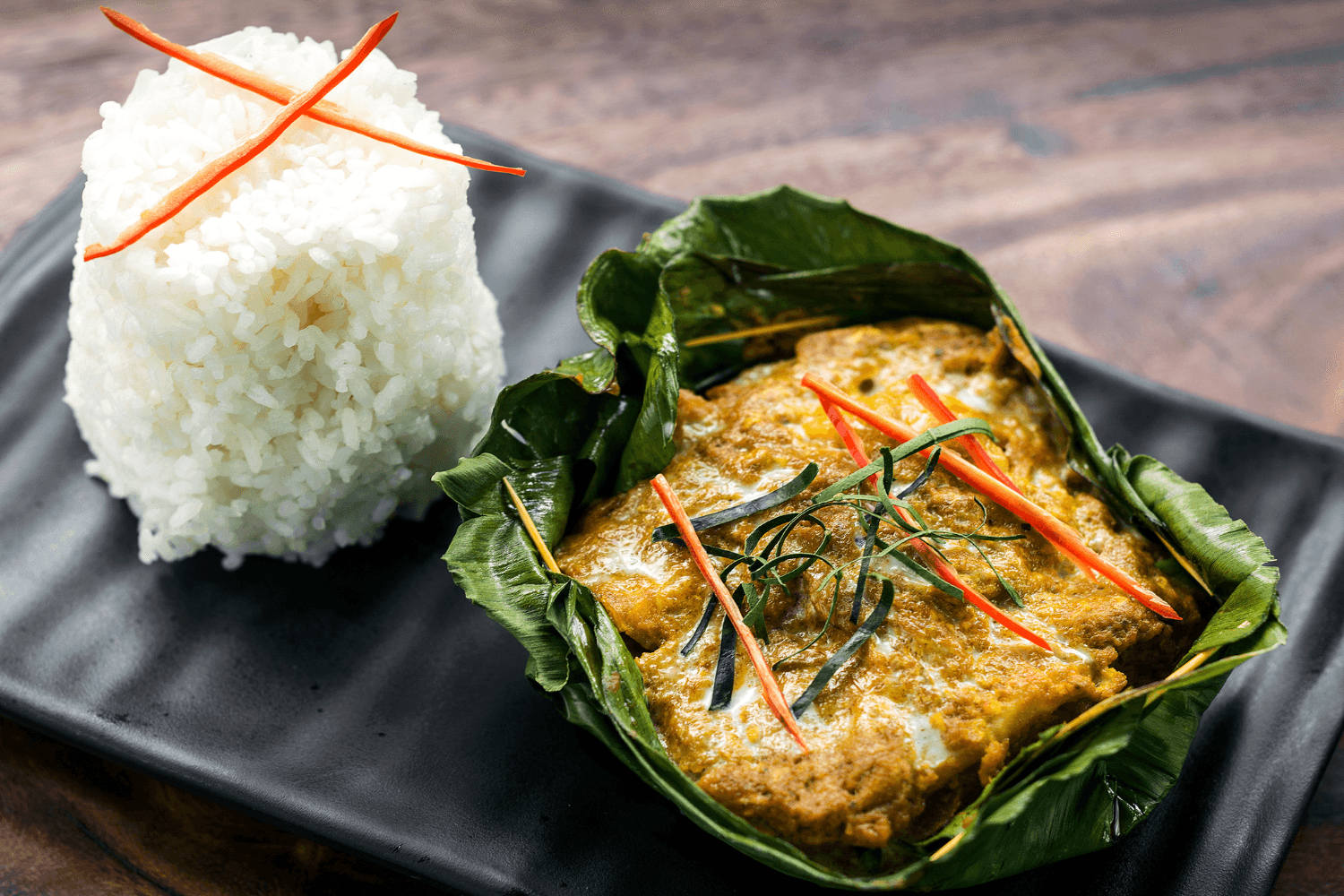
- Fish Amok: Often hailed as Cambodia’s national dish, this velvety coconut curry with river fish, gently steamed in banana leaves, offers a fragrant, creamy delight that captures the essence of Khmer cooking.
- Lok Lak: Tender stir-fried beef cubes served with a zesty lime-and-pepper dipping sauce, accompanied by a perfectly fried egg, making for a hearty, satisfying meal.
- Kuy Teav: A popular breakfast noodle soup featuring a clear broth, fresh herbs, and a choice of pork or beef, light yet comforting.
- Nom Banh Chok: A Cambodian breakfast staple, this dish of rice noodles topped with green fish curry and fresh vegetables is both refreshing and flavorful.
Hydration & Safety: While Cambodian tap water is not potable, purified bottled water is widely available. Fresh fruit juices and herbal teas provide refreshing alternatives, enhancing your sensory journey through Cambodia’s vibrant food culture.
CULTURAL ETIQUETTE & MODESTY NORMS
Cambodia’s rich cultural heritage is deeply rooted in respect, humility, and harmony, values that shape everyday interactions and traveler conduct alike. When visiting temples and sacred sites, modest dress is essential: shoulders and knees should be covered, and footwear should be removed before entering. Lightweight, breathable clothing that meets these standards is advisable in tropical climates.
Physical contact is generally restrained and formal. Avoid touching a person’s head, which is considered sacred, and refrain from pointing your feet toward people, religious icons, or Buddha statues, as feet are regarded as the lowest and least clean part of the body. Public displays of affection are uncommon and often viewed as inappropriate, especially in rural areas.
When greeting locals, a gentle “sampeah”, the traditional Cambodian gesture of pressing the palms together at chest level, is both respectful and appreciated. Speak softly and avoid raising your voice or engaging in confrontational behavior, as maintaining face and social harmony is paramount.
Visitors are encouraged to approach Cambodian customs with openness and sensitivity. Genuine respect and humility will be warmly reciprocated, enriching your experience of this gracious and timeless culture.
Respect Sacred Traditions
- Never touch anyone’s head; it’s considered the most sacred part of the body.
- Avoid pointing your feet at people or religious objects.
- Do not climb on Buddha statues or pose disrespectfully for photos.
- Show appreciation for local customs and religious practices
Keep Physical Contact Reserved
- Refrain from public displays of affection, especially in villages.
- A traditional “sampeah” (palms pressed together at chest level) is a polite and common way to greet.
- A gentle bow or smile goes a long way.
Mind Your Tone & Body Language
- Speak softly and avoid raised voices; social harmony is highly valued.
- Avoid aggressive gestures or confrontational behavior.
- Always ask before taking someone’s photo, especially monks or elders.
WEATHER AND SEASONS
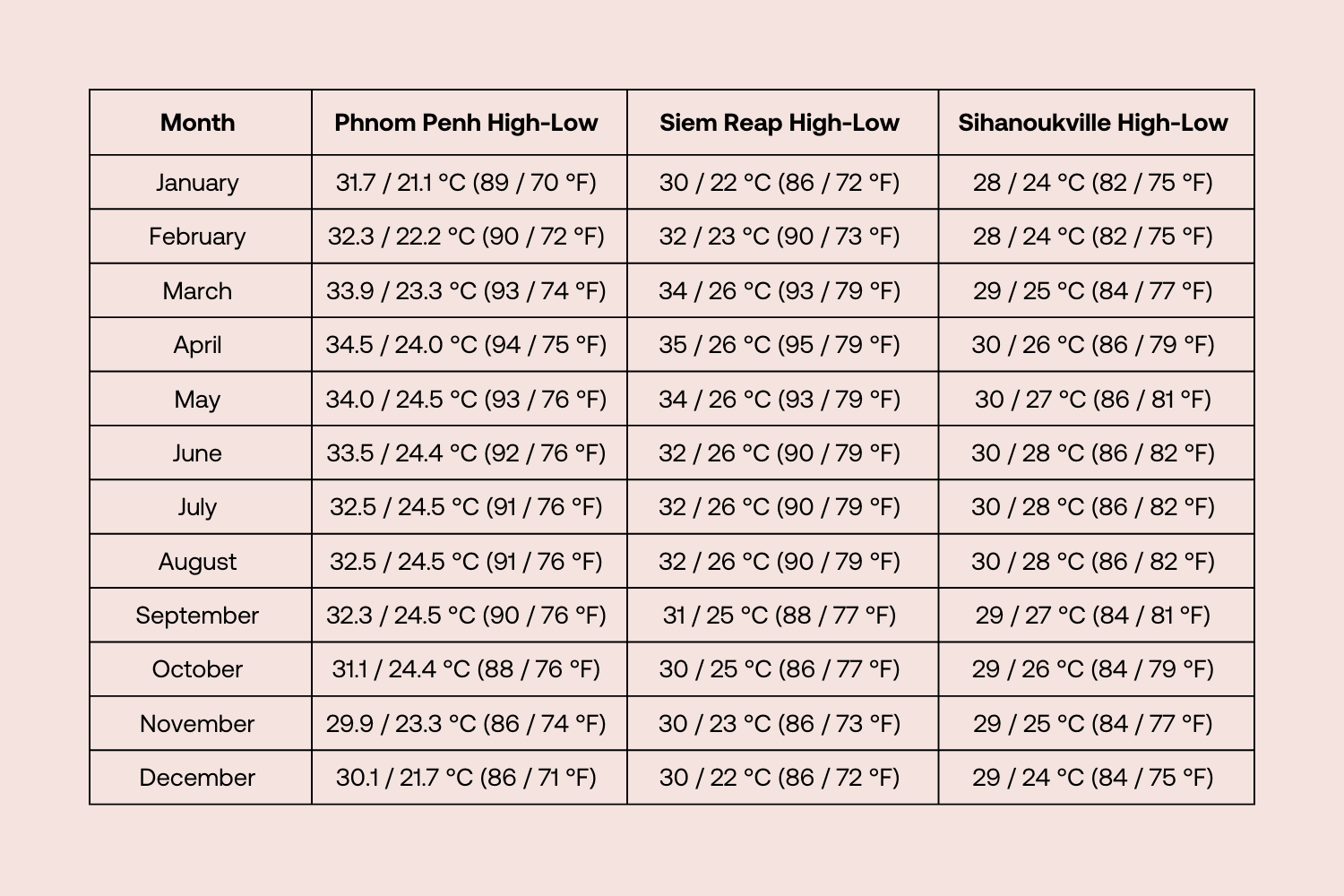
Cambodia features a tropical monsoon climate, with consistently warm temperatures year-round and distinct wet and dry seasons.
- Cool Season (Nov–Feb): Pleasant, dry weather, ideal for travel.
- Hot Season (Mar–May): Temperatures peak, especially inland.
- Wet Season (Jun–Oct): Afternoon rains refresh the landscape; some road travel delays are possible.
RECOMMENDED PACKING LIST
Our suggested packing list is not meant to be exhaustive; every traveler has different needs. If you feel there is something else you should bring, please do so. When in doubt, contact us for advice. The following general packing list recommends the equipment or clothing we have found most practical in Cambodia, based on our experience.
Essentials
- Travel insurance policy details (printed and digital)
- Local currency and backup credit/debit card
- International travel adapter to charge your devices
- Unlocked smartphone + local SIM card/ E-Sim installed/ or roaming enabled
Clothing
- Lightweight tops (cotton, linen, moisture-wicking)
- Long-sleeve shirts for sun and cultural sensitivity
- Waterproof jacket
- Comfortable walking shoes
- Sandals or slip-ons (for hotel or light walking)
- Modest attire for temples or rural visits (cover shoulders and knees)
- Smart-casual outfit for fine dining or cultural events
- Undergarments & sleepwear
- Sunhat or cap
- UV-protective sunglasses
Toiletries & Health
- Prescription medications (with original labels)
- Basic first aid kit (pain relievers, regular taking pills, etc.)
- Hand sanitizer, wet wipes, and toilet paper/tissues (public toilets may lack supplies)
- Sunscreen (SPF 30 or higher) and lip balm
- Bug repellent
- Earplugs
- Travel-size toiletries (hotels may not provide Western brands)
- Reusable water bottle
- Travel pillow and eye mask for flights or long train rides
- Small travel laundry kit or laundry service allowance
HISTORY
Cambodia’s story stretches back millennia, nestled in the heart of Southeast Asia as a land of rich cultural heritage and remarkable resilience. The earliest known human settlements date back tens of thousands of years. Still, in the 1st century CE, Cambodia began to emerge as a significant kingdom under the influence of Indian civilization, with the Funan and Chenla kingdoms laying the foundations for its cultural and political structures.
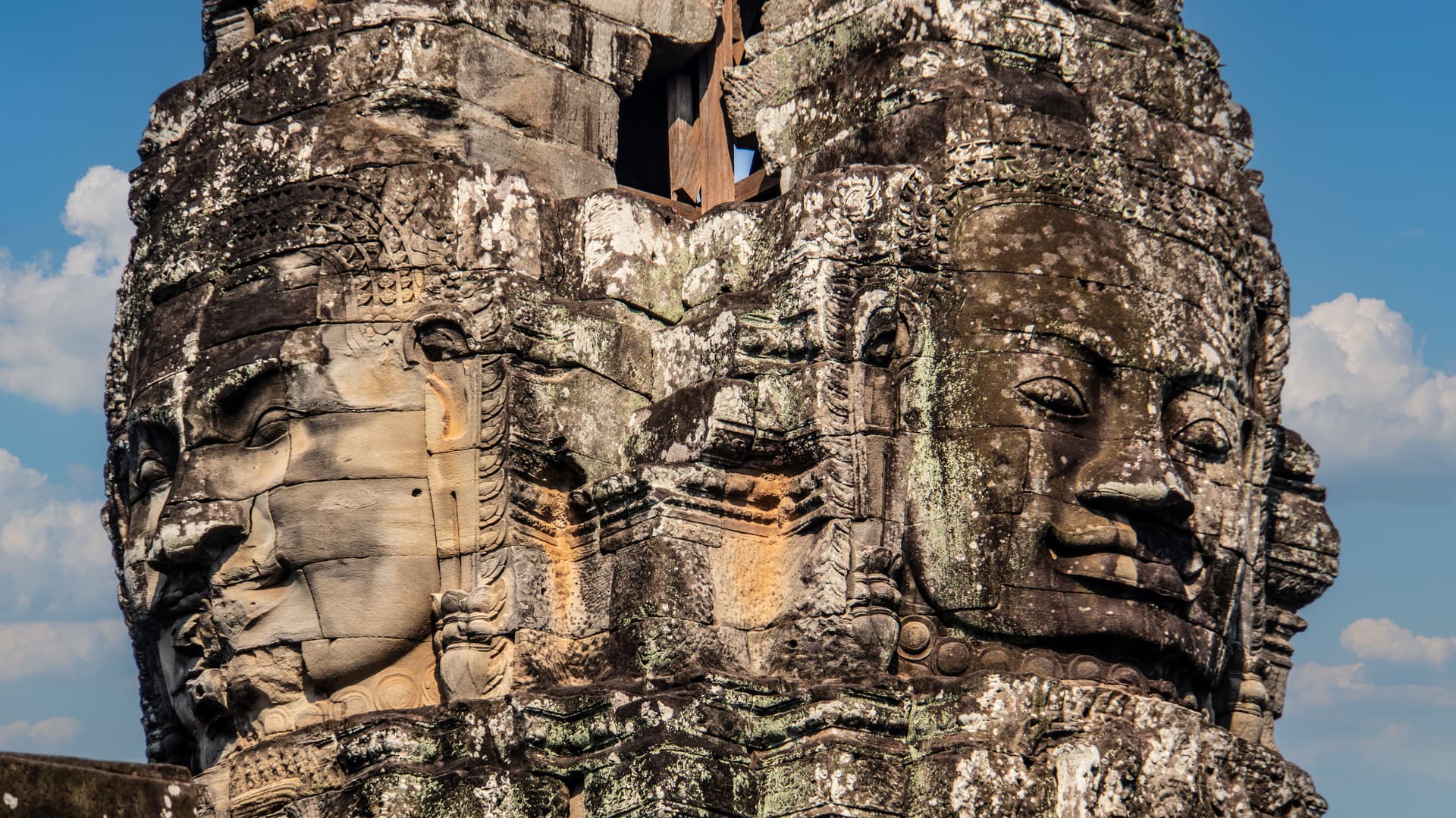
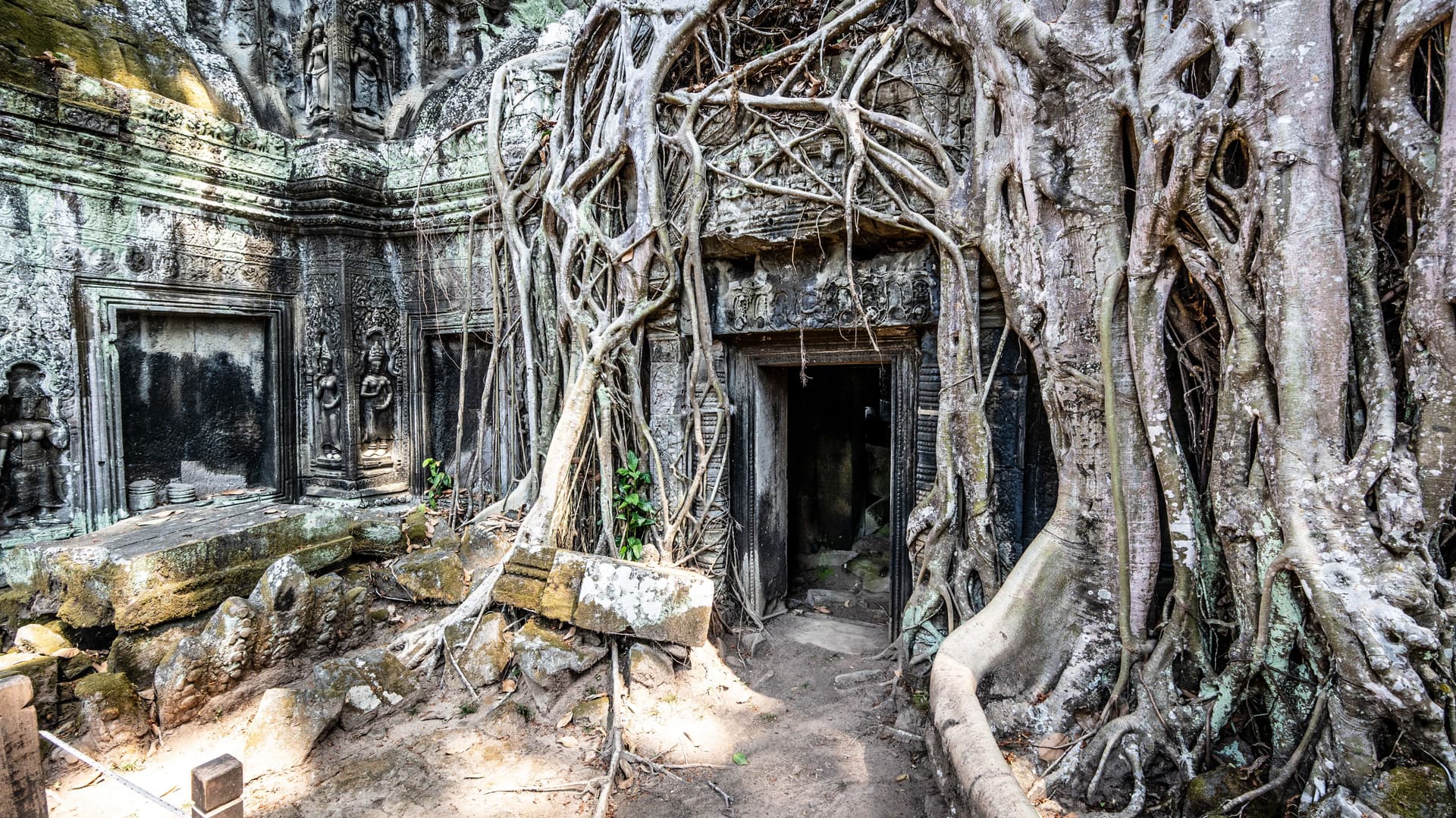
The height of Cambodia’s historical glory was the Khmer Empire (circa 9th to 15th centuries), which dominated much of mainland Southeast Asia. Founded by King Jayavarman II in 802 CE, the empire built the awe-inspiring temple complex of Angkor Wat in the early 12th century under King Suryavarman II. This monumental achievement, one of the largest religious sites on earth, showcases extraordinary architecture, symbolism, and artistry, blending Hindu and later Buddhist influences. Angkor Thom, Bayon Temple with its iconic smiling faces, and Ta Prohm’s atmospheric jungle ruins further narrate the empire’s zenith.
Following the empire’s gradual decline, Cambodia entered a period of instability and territorial loss, frequently caught between the emerging powers of Thailand (Siam) and Vietnam. In the 19th century, Cambodia became a French protectorate (1863–1953), which introduced modern infrastructure and administrative reforms but also created dependency and tensions.
The 20th century marked turbulent times: after gaining independence in 1953 under King Norodom Sihanouk, Cambodia suffered deeply during the Vietnam War spillover. The most tragic chapter unfolded during the Khmer Rouge regime (1975–1979), led by Pol Pot, which resulted in genocide and the deaths of approximately 1.7 to 2 million people, nearly a quarter of the population. This dark period profoundly scarred the nation but also forged a determined path toward recovery.
Since the 1991 Paris Peace Accords and subsequent UN-supervised elections, Cambodia has experienced steady political stabilization and economic growth. Tourism surged in the late 1990s, drawing visitors eager to explore its rich heritage, vibrant culture, and natural beauty. Today, Cambodia blends ancient traditions with modern ambitions, offering travelers an authentic glimpse into Southeast Asia’s enduring spirit.
RELIGION
Cambodia’s spiritual heartbeat is undeniably rooted in Theravada Buddhism, which permeates nearly every facet of daily life. Over 95% of Cambodians embrace this faith, and saffron-robed monks are a familiar and respected presence in villages, towns, and cities alike. The ritual rhythms of monastic life, morning alms rounds, temple prayers, and community festivals create a timeless continuity that anchors the nation’s cultural and religious identity.
Yet, Cambodia’s religious tapestry is more than just Buddhism. The echoes of ancient Hinduism resonate vividly in the majestic Angkor temples, where mythic carvings of gods and celestial dancers narrate a divine past that shaped the Khmer Empire’s grandeur. Beyond the temples and monasteries, rural Cambodia reveals a fascinating blend of animism and ancestor worship. Spirit houses dot village corners, inviting offerings and protection, while festivals such as Pchum Ben, an evocative ceremony honoring ancestors, draw communities together in profound acts of remembrance and reverence. This fusion of Buddhist tranquility, Hindu symbolism, and animist tradition creates a spiritual landscape that is both complex and deeply intimate, a reflection of Cambodia’s enduring soul and its people’s reverence for the unseen forces shaping their world.
GEOGRAPHY
Cambodia unfolds across 181,035 square kilometers (69,898 square miles) of mesmerizing landscapes, where nature’s contrasts play out in lush plains, winding rivers, and misty highlands. At the heart of the country lies the vast Tonlé Sap Lake, Southeast Asia’s largest freshwater body, an ecological marvel whose seasonal expansion and contraction shape the livelihoods of millions. Feeding this aquatic heart is the mighty Mekong River, whose flow carves fertile valleys and sustains Cambodia’s agricultural backbone. From the low-lying deltaic plains to the rugged Cardamom Mountains in the southwest, Cambodia’s terrain is as diverse as its culture. The highlands rise to more than 1,700 meters (5,577 feet), cloaked in dense rainforests that harbor rare wildlife and offer a serene escape from the tropical heat. Along the southern coast, over 440 kilometers (273 miles) of pristine beaches and mangrove forests fringe the Gulf of Thailand, beckoning travelers with sun-drenched tranquility and vibrant marine life. This geographical tapestry is not just a backdrop but a living, breathing force that influences everything from seasonal festivals to the flow of commerce and culture. Whether drifting on the Mekong at sunrise, trekking through the Cardamoms, or exploring ancient temples nestled in forested hills, Cambodia’s landscape invites discovery and reflection in equal measure.
RECOMMENDED BOOKS
- THE HISTORY OF CAMBODIA: A Chronicle of Power and Culture from the Khmer Empire to Modern Nationhood: by Nathaniel Gideon (2024): This recent publication provides a wide-ranging overview of Cambodia's historical and cultural journey, covering key periods and transformations.
- First They Killed My Father - Loung Ung (2000): Haunting memoir of surviving the Khmer Rouge.
- When Broken Glass Floats - Chanrithy Him (2001): Another deeply moving Khmer Rouge survivor’s story.
- Cambodia’s Curse - Joel Brinkley (2011): Political exploration of Cambodia’s recovery and challenges.
- In the Shadow of the Banyan - Vaddey Ratner (2012): Lyrical novel rooted in real tragedy.
- Temple of a Thousand Faces - John Shors (2013): Historical fiction centered on Angkor Wat.
- A Dragon Apparent - Norman Lewis (1951): Classic travel writing on Indochina before the wars.
RECOMMENDED MOVIES
- Lost Temples of Cambodia (TV Mini Series 2024)
- The Missing Picture (2013): Academy Award-nominated documentary using clay figures to depict the Khmer Rouge era.
- First They Killed My Father (2017): Angelina Jolie’s powerful film adaptation.
- Don't Think I've Forgotten: Cambodia’s Lost Rock and Roll (2014): Fascinating look at 1960s music culture.
- Rithy Panh’s S21: The Khmer Rouge Killing Machine (2003): A chilling but essential documentary.
- The Gate (2014): This is based on a memoir of a French diplomat captured by the Khmer Rouge.


