Nepal Travel Guide
BRIEF INTRODUCTION
A Journey Through Myths, Mountains, and Multitudes. Nepal unfolds between the soaring peaks of the Himalayas and the fertile plains of the Terai, a land where landscapes shape life and culture at every turn. Home to diverse ethnic communities, many of whom maintain centuries-old traditions, Nepal presents a mosaic of languages, religions, and ways of life. Daily existence is closely intertwined with Hindu and Buddhist practices, visible in temple rituals, vibrant festivals, and the omnipresent prayer flags that color the hillsides and riverbanks. Visitors encounter a society where continuity and heritage are woven into everyday routines, yet subtle modern influences thread through bustling cities and trading towns. Travel here is not merely a journey through geography; it is an immersion in a rhythm of life defined by spirituality, community, and a profound connection to the land itself.
PRACTICAL INFORMATION
Visa & Entry
Getting into Nepal is easy for most travelers, but a little prep goes a long way. Citizens of most countries, including the United States, Canada, EU nations, Australia, and many others, are eligible for a tourist visa on arrival at Tribhuvan International Airport in Kathmandu and at several designated land border crossings.
The visa-on-arrival process is relatively smooth, but to avoid delays, travelers are encouraged to complete the online visa application (pre-arrival form) via the official Department of Immigration website within 15 days before entry. Bring a printed copy of your submission receipt, a passport-sized photo, and your passport (valid for at least 6 months from the day of entry).
Visa fees as of 2025:
- 15 days: USD 30
- 30 days: USD 50
- 90 days: USD 125
Payment is accepted in cash (USD is preferred). Credit card payments may be accepted, but system reliability varies.
Travelers crossing into Nepal by land (from India or Tibet) should check the border post's availability and opening hours in advance.
This information is accurate as of June 2025. For the most current and reliable updates, please refer to the official website and confirm the details before your departure.
Medical record and liability release: All travelers must complete and sign our trip application form, which includes the medical record and liability release.
ELECTRICITY
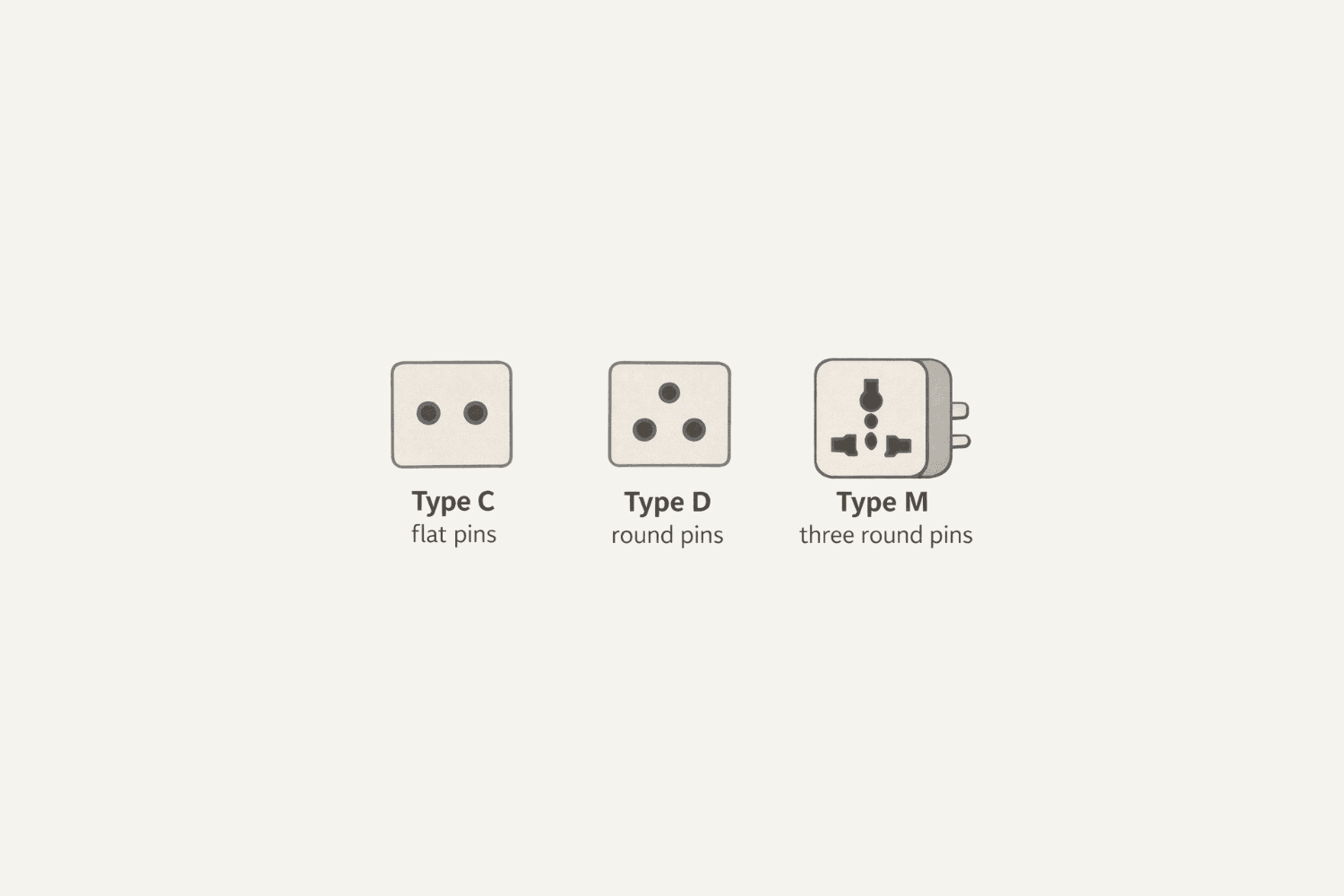
Nepal operates on a 230V, 50Hz power supply, consistent with electrical standards in many parts of Europe, Asia, and Africa. Most sockets accommodate Type C plugs (the standard European two-round-pin variety), although Type D (three-round-pin) and Type M (larger three-round-pin) outlets may also appear, particularly in older buildings or rural lodges.
Power outages, known locally as “load shedding,” have significantly decreased in recent years, but occasional blackouts still occur in remote areas or during the monsoon season. Most hotels are equipped with backup generators or inverters to ensure uninterrupted electricity.
To stay connected and keep your devices charged:
- Bring a universal travel adapter that supports Type C, D, and M plugs.
- Pack a power bank, especially if traveling to remote villages or trekking routes where access to electricity may be limited.
- Surge protection is advisable for sensitive electronics such as laptops and camera gear.
INTERNET AND SIM CARD
Staying connected in Nepal is generally straightforward in urban centers like Kathmandu, Pokhara, and Chitwan, but it becomes patchy in remote or mountainous regions. Most hotels, restaurants, and cafés in cities offer Wi-Fi, though speeds can be inconsistent, especially during peak hours. Outside main towns, connections may be slow, intermittent, or entirely unavailable. For reliable data and calls, travelers can purchase a local SIM card at the airport for approximately $15 USD, valid for 28 days and typically offering around 1 GB of data per day.
- If using a local SIM, your home-country number will be inactive, but WhatsApp and similar apps remain functional as long as account settings aren’t changed.
- Another increasingly popular option is the E-SIM (electronic SIM). If your phone supports it (most modern smartphones do), you can purchase and install the virtual SIM before departure, so your phone connects automatically upon landing.
- Wi-Fi is available in most hotels and cafés, though often limited to public areas and slower in rural areas.
- International roaming is possible but generally costlier and less reliable, especially in remote regions.
For the smoothest experience, we recommend using a local SIM or travel E-SIM and
downloading essential offline maps and translation apps in advance.
CURRENCY AND MONEY
Nepalese Rupee (NPR) is the currency. Please check the USD=NPR rate here.
As of June 2025:
- 1 USD ≈ 138.9 NPR
- 1 EUR ≈ 160.1 NPR
Currency exchange is available at banks, licensed money changers, and some hotels. ATMs are common in cities like Kathmandu and Pokhara, but unreliable in rural areas. Always carry enough cash when traveling beyond urban centers. Credit cards are accepted in upscale hotels, restaurants, and shops, but most local businesses operate on a cash-only basis.
IMPORTANT
If you bring foreign currency notes (USD or EUR), ensure the bills are new, clean, and free from marks or tears. For US dollars, bills issued before 2006 are often not accepted due to counterfeiting concerns. Larger denominations, such as USD 100 or EUR 100, are generally easier to exchange and offer better rates.
TIPS (GRATUITIES)
Tipping is appreciated across Nepal’s tourism industry, though not strictly mandatory. It’s seen as a gesture of gratitude for good service and is widely practiced by international travelers.
Here are our recommendations for tipping:
- Hotel staff / Bellboys: $1–2 per bag (after service)
- Local guides: ~$10-20 per day
- Drivers: ~$5-10 per day
- Porters (trekking): ~$5-10 per day
- Teahouse/Homestay: $1–3 per traveler, per day
- Other services (e.g., porters, housekeeping): $1–3 per traveler, per day
Tipping amounts can vary depending on service quality; feel free to adjust accordingly. Where possible, tip in cash and in local currency (NPR).
PERSONAL EXPENSES
Before your trip, please review your proposal carefully to understand what is included in your package and what is not. If you are not sure, contact us.
Travelers should budget for meals not included in the trip cost, as well as souvenirs, extra food and drinks, communication, laundry, and other personal expenses. For a 10–14-day journey, budgeting USD 300–400 per person is typically sufficient. Those who plan to dine frequently at restaurants, enjoy alcoholic beverages, or shop extensively may wish to budget USD 500–600 for added flexibility.
- Meals at local restaurants typically range from $8 to $15 USD per person.
- Credit cards are accepted in urban centers such as Kathmandu and Pokhara, but their use is limited elsewhere. Expect a 3.5–4% bank fee for card transactions.
- ATMs are available in most towns, but outages are not uncommon. Carry enough cash, especially when heading into remote areas.
- Be sure to exchange currency in major cities before traveling into rural regions. Local banks and exchange counters at the end of the trip can reconvert any remaining Nepalese Rupees into USD or Euros.
International grocery stores in Nepal are limited, with most imported products available primarily in Kathmandu and Pokhara through local supermarkets and specialty shops. Stores such as Bhat-Bhateni Supermarket and Big Mart stock a modest selection of imported food and beverages catering to expatriates and residents. Convenience stores with international branding are scarce, and outside major urban centers, access to imported groceries is minimal. Tourist hotels and upscale lodges may offer a limited range of international products to meet guest needs.
HEALTH
Health conditions in Nepal vary widely depending on region and altitude. In major cities such as Kathmandu and Pokhara, private clinics and hospitals provide reasonable care, though service quality and facilities remain basic compared to Western standards.
Mosquito-borne illnesses, including malaria and dengue, are rare but present in the southern Terai region; protective measures include insect repellent and covering skin when visiting lowland areas. Tap water should not be consumed; always use sealed bottled water or boiled water.
Please note we are not authorized to provide health-related advice, including recommendations on required vaccinations. We strongly encourage you to seek professional advice from a Medical Doctor prior to your trip - allow sufficient time for vaccinations that may require a longer interval between shots. Here are the recommendations of the selected National Health Service:
- United States (CDC) – Travel Health and Vaccine Guidance for Nepal
- United Kingdom (GOV.UK and NHS) – Travel Health and Vaccine Advice
- NHS – Travel Vaccination Advice
TRAVEL HEALTH INSURANCE
Valid travel insurance is mandatory for all travelers. Your policy must cover medical evacuation, including emergency air transport back to your home country.
Carry both printed and digital copies of your insurance certificate, along with your policy number and your insurer’s 24/7 emergency contact details. If anything unexpected happens during your trip, our team and local partners will assist where possible, including helping you communicate with medical staff and your insurance company.
While private clinics in Kathmandu and Pokhara offer reasonable services, facilities in remote and high-altitude regions are limited, and serious emergencies often require air evacuation, sometimes to another country.
Travelers are advised to carefully review their insurance terms to confirm coverage for pre-existing conditions, emergency evacuation, and high-altitude trekking. Having reliable insurance provides peace of mind, allowing travelers to explore Nepal’s mountains, valleys, and cultural sites safely.
ACCOMMODATIONS
Nepal has welcomed international visitors for more than five decades, and its accommodation reflects both long-standing hospitality traditions and the practical realities of a developing, mountainous country. In urban centers such as Kathmandu, Bhaktapur, and Pokhara, travelers will find a broad range of lodging options, from established five-star hotels and refined boutique properties to well-run guesthouses.
Within major cities and key cultural hubs, accommodation standards are generally reliable. Rooms are comfortable, service is attentive, and facilities meet international expectations. Outside these areas, accommodations become more modest by necessity. Properties prioritize location, atmosphere, and cultural context rather than luxury. Cleanliness and genuine hospitality are typically consistent, while amenities may be limited due to terrain, infrastructure, and regional access. This variation is an inherent part of travel in Nepal and contributes to a more grounded, authentic experience.
As travel extends beyond well-established tourism corridors, comfort levels naturally decrease. In remote or less-developed regions, accommodations may be basic, with limited facilities, simpler furnishings, and variable maintenance standards. Every effort is made to select the best available options in each location.
On selected itineraries, homestays or monastery accommodations may be included as a culturally immersive alternative to hotels. These stays are intentionally simple. Guests typically sleep on floor mattresses with clean linens and warm blankets and share basic facilities such as squat toilets and cold showers, though warm water can often be arranged. While basic in comfort, these experiences provide rare and meaningful insight into daily life, local customs, and Buddhist monastic traditions.
TRANSPORTATION AND TRAVEL
Land transportation in Nepal is primarily provided by private vehicles, selected based on group size, ranging from sedans and SUVs to comfortable minibuses. Vehicles are generally modern, though travel can be slow due to poor road conditions, landslides, or monsoon-related damage. On unpaved side roads and mountainous terrain, sturdy 4x4 jeeps with experienced local drivers are used to ensure safety and reliability. Some itineraries include short domestic flights, which can significantly reduce travel time but are subject to weather-related delays, particularly in the monsoon season.
Travelers should note that luggage space in vehicles and on domestic flights is limited. Large suitcases may need to be transported separately or packed efficiently in soft bags. On domestic flights, typical weight allowances are 15–20 kg per passenger, and excess baggage is either charged separately or must be left at the hotel. Planning light and flexible packing is strongly advised to avoid complications during transfers.
FLIGHTS AND BAGGAGE
Nepal’s primary international gateway is Tribhuvan International Airport (Kathmandu), the only airport currently handling international flights. Domestic services link Kathmandu to regional hubs such as Pokhara, Bharatpur, Lukla, and Biratnagar, which serve as gateways to trekking regions, national parks, and cultural sites.
For most international flights to Nepal, economy-class passengers are allowed 20–25 kg of checked baggage, while business-class passengers may carry up to 30 kg. Hand luggage is typically limited to 7 kg and must not exceed 45×35×20 cm. However, it can vary; that said, luggage weighing is usually not very strict, and the cost of extra luggage (overweight) is less than USD 1 per kg.
When packing, keep in mind that domestic flights in Nepal are often delayed or rescheduled due to weather or operational constraints. It's advisable to carry essentials, medication, electronics, and a change of clothes in your hand luggage.
FOOD
In Nepal, meals provide a hearty reflection of the country’s diverse geography and cultural influences. Tea (chia) is the national drink, typically milky and sweet, though in highland regions it may be served in a Tibetan-style preparation with butter and salt. Alcohol is available in tourist-focused hotels and restaurants, with local beers such as Everest or Gorkha common, while traditional homebrews like raksi may appear in rural villages. In urban centers such as Kathmandu and Pokhara, Western and pan-Asian dishes are also readily found, but in remote villages, menus are more limited and largely locally driven. Travelers should note that Nepali food is often simple and mildly spiced, designed to provide energy in high-altitude environments, and may differ significantly from Western tastes. For food safety, eat fully cooked meals, avoid raw vegetables or unpeeled fruits, and use bottled or properly boiled water. Carrying purification tablets or a refillable filter bottle is recommended when traveling in remote areas.
Travelers should avoid raw vegetables and unpeeled fruit, and drink only bottled or properly boiled water. In remote areas, carrying water purification tablets or a refillable filter bottle is strongly recommended.
Common dishes:
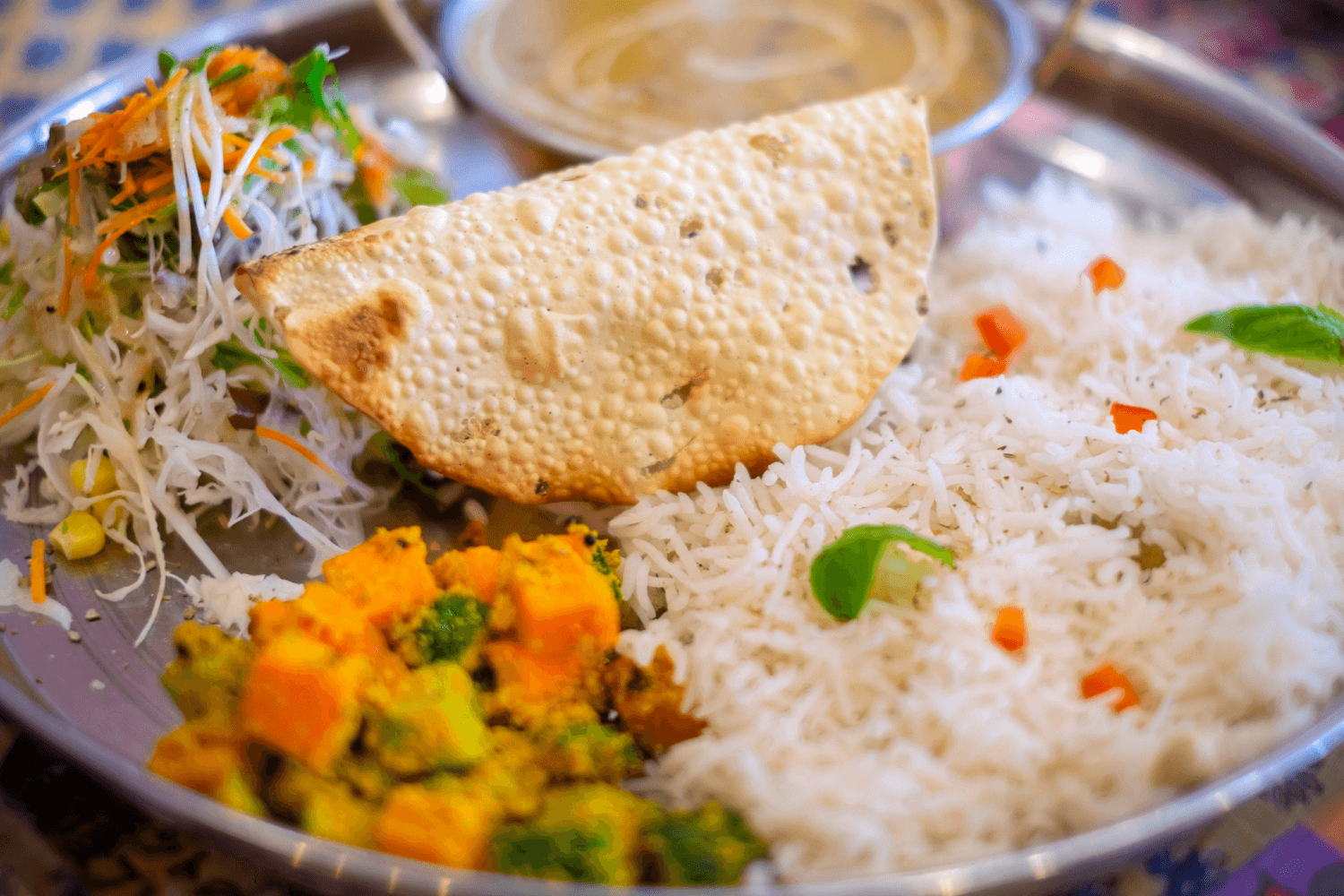
- Dal Bhat: The national staple, a generous platter of steamed rice (bhat) served with lentil soup (dal), vegetable curries, pickles (achar), and sometimes meat. Nourishing and eaten daily across the country.
- Momo: Steamed or fried dumplings filled with vegetables, chicken or buffalo meat, typically served with a tangy tomato-based dipping sauce. Found in both street stalls and restaurants.
- Gundruk: Fermented leafy greens, usually served as a side dish or soup, reflecting traditional preservation methods in the hills.
- Sel Roti: A sweet, ring-shaped rice flour bread, crispy on the outside and soft inside, often enjoyed during festivals.
- Thukpa: A hearty noodle soup with vegetables and meat, common in the Himalayan and Tibetan-influenced regions of northern Nepal.
CULTURAL ETIQUETTE & MODESTY NORMS
Nepalese society is traditional and relatively conservative, with customs influenced by Hinduism. While their ethical system can be strict, travelers are not expected to fully master it. Nepalese people are familiar with Western customs and will accept Western behavior, understanding that you are guests.
Respect for personal dignity is paramount. Respect locals, your hosts, and yourself. Avoid loud conversations and jokes in your language near locals, as they may misunderstand or take offense. Try to accept and put effort into learning about their way of life without judgment.
Here are some key principles:
- Saving face (loss-avoidance) is critical. Never raise your voice or try to prove someone wrong. Helping others "save face" encourages cooperation; shouting or insulting undermines respect and support.
- Greet by pressing your palms together, bowing slightly, and saying "Namaste."
- Give and receive gifts with both hands as a sign of respect.
- Eat with your right hand only; the left hand has a different cultural role.
- Handshakes are common in urban areas but uncommon in rural areas, especially with women.
- Do not touch someone's head or shoulders; the head is sacred.
- Feet are considered unclean; avoid stepping on people, food, or sacred objects.
- Remove shoes before entering homes, monasteries, and temples.
- Many Hindu temples prohibit non-Hindus from entering; if allowed, remove shoes and leather items.
- Dress modestly; avoid sleeveless or revealing clothes, especially for women. Long clothes help protect against mosquito bites.
- Never point with a finger; if necessary, point with the whole hand.
- Cows are sacred; avoid beef near locals, especially Hindus.
- Food that has been touched or bitten by others is considered contaminated; do not share or return it to communal dishes.
- Circumambulate stupas and temples clockwise, keeping the right side facing inward.
- Avoid giving alms, especially to children, as it can lead to school dropouts. Donate through trusted charities recommended by your guide.
- Avoid purchasing ivory or fur products, as this encourages illegal hunting and environmental damage.
- If buying antiques, request proof of legal purchase to avoid export issues
- Smoking is not allowed in public places. However, many Nepalese men smoke, so smokers can usually find places to smoke. Hotel policies vary; some allow smoking in lobbies or rooms, others forbid it.
WEATHER AND RECOMMENDED SEASONS
Nepal’s dramatic topography, from the soaring Himalayan peaks in the north to the lush Terai jungles in the south, creates striking climatic contrasts over short distances. While southern Nepal experiences a subtropical climate with hot, humid summers and mild winters, the northern regions enjoy cooler alpine conditions, with crisp summers and winters that can dip well below freezing.
The Himalayas create a rain shadow in the north, keeping regions like Mustang and Dolpo dry year-round, while the southern lowlands and Kathmandu Valley receive monsoon rains from June to September.
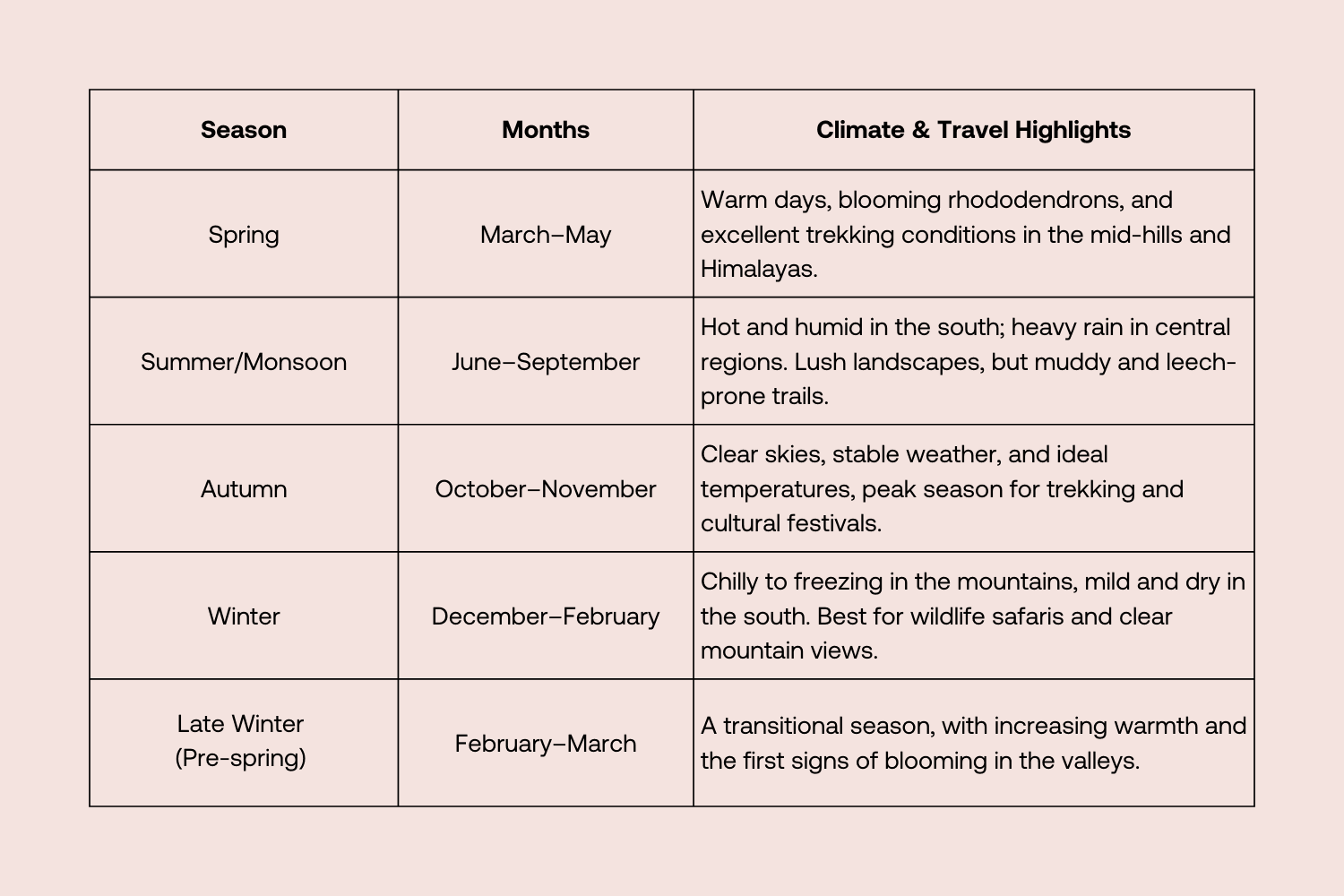
Nepal follows five distinct seasons, each shaping the traveler’s experience:
When to Visit
The best times to travel are spring (March–May) and autumn (October–November), when clear weather, vibrant festivals, and ideal trekking conditions prevail. While the monsoon season brings intense greenery and fewer tourists, it also presents travel challenges due to rain and landslides in certain regions.
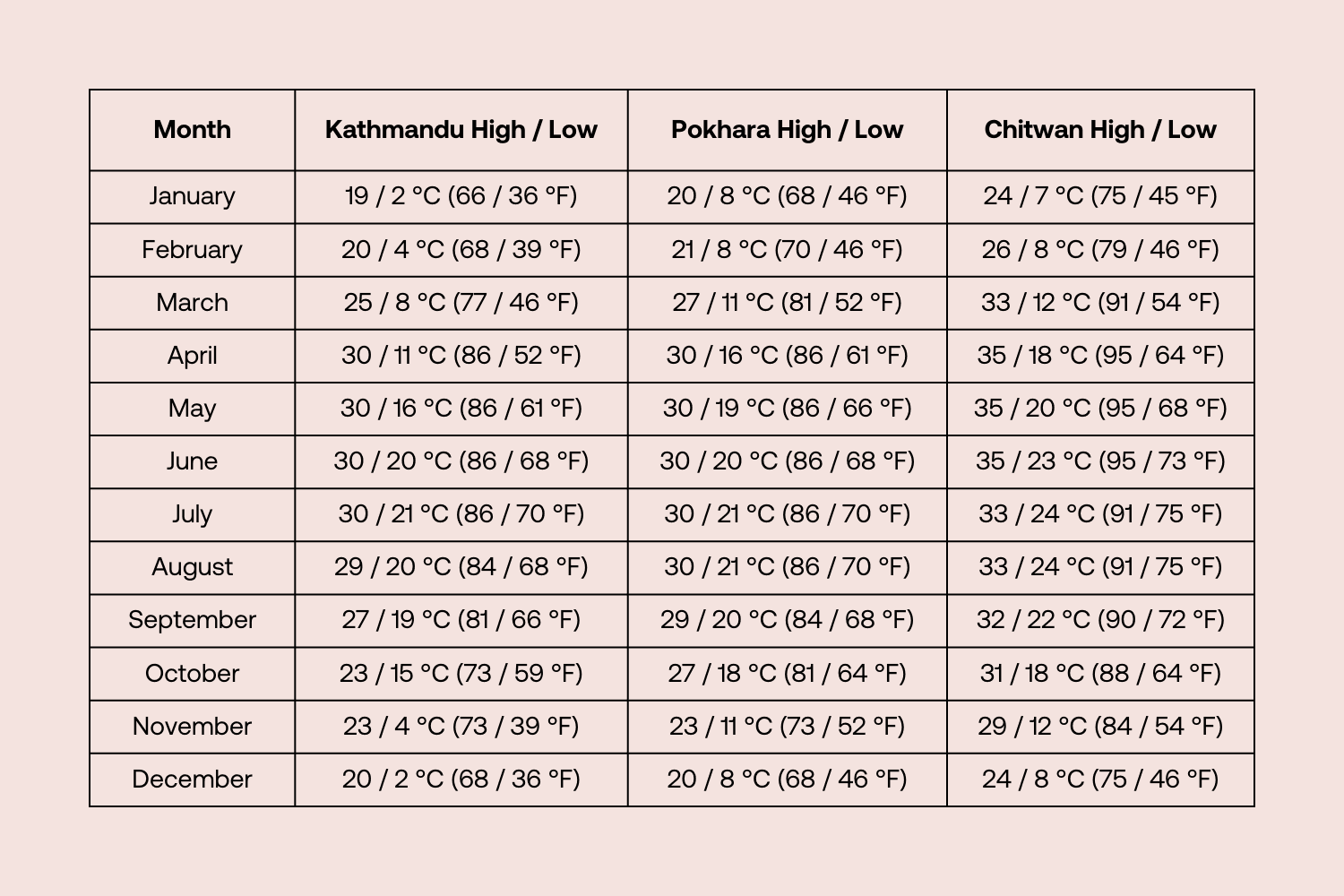
The Himalayas act as a natural barrier, casting a rain shadow over much of the north. As a result, regions like Mustang and Dolpo remain relatively dry year-round, while the southern lowlands and Kathmandu Valley receive monsoon rains between June and September.
Nepal follows five distinct seasons, each shaping the traveler’s experience:
RECOMMENDED PACKING LIST
Nepal’s diverse geography and unpredictable weather, ranging from jungle heat to alpine chill, require layered, functional gear. This list assumes light trekking and cultural touring, not high-altitude mountaineering.
Clothing Essentials
- Moisture-wicking base layers (tops and underwear – quick-dry, odor-resistant)
- Short-sleeve shirts (breathable and quick-dry)
- Long-sleeve shirts (sun protection + layering)
- Convertible trekking pants (lightweight, zip-off style preferred)
- Fleece or insulated mid-layer
- Lightweight windproof/rain jacket (Gore-Tex or similar)
- Rain pants (especially for monsoon season or jungle areas)
- Down jacket or warm insulated jacket (Nov–Feb or any highland region)
- Wool hat and gloves (essential year-round for mountain areas)
- Sun hat or baseball cap
- Swimsuit (for hotel pools or hot springs)
- Socks (3–5 pairs, moisture-wicking or wool blend)
- Comfortable sandals/flip-flops (for rest days or hotels)
- Hiking boots (broken-in, high-ankle, waterproof)
- Casual outfit (for dinners in town or cultural visits)
Bags & Carriage
- Daypack (25–35L) – carry-on size with padded shoulder straps
- Large duffel bag or soft travel backpack (avoid hard suitcases)
- Dry bag or plastic liners (to protect contents from rain)
- Money belt/neck pouch/ankle wallet (for valuables)
Health & Hygiene
- Personal first aid kit (including band-aids, antiseptic, anti-diarrhea meds, altitude pills if prescribed)
- Hand sanitizer & wet wipes
- Toiletries (travel-size, eco-friendly where possible)
- Toilet paper/tissues (often not provided in public toilets)
- Sunscreen & Lip balm with SPF
- Insect repellent
- Quick-dry towel
Electronics & Tools
- Headlamp or flashlight (power cuts can occur; keep hands free)
- International power adapter (Nepal uses Type C, D, and M; voltage 230V)
- Camera, memory cards, batteries
- Mobile phone & charger
- Portable power bank
- E-reader or compact guidebook
Trekking Accessories
- Trekking poles (foldable or telescopic)
- Water bottle (minimum 2-liter capacity or two 1L bottles)
- Water purification tablets or a portable filter (for rural areas)
- Snacks/energy bars/trail mix (availability limited outside cities)
- Pocket knife or multi-tool (pack in checked luggage)
Optionally, culturally appropriate gifts can offer a heartfelt way to connect with local communities. Thoughtful items such as school supplies, simple accessories, or small handmade tokens are often warmly received, particularly in rural areas where such gestures carry added significance.
- School supplies (pencils, crayons, English booklets)
- Simple scarves, bracelets, and handmade crafts
- Inflatable globes or balls (great for kids)
- Lip balm or cosmetics (for adult women)
- Do not bring sweets; locals often lack access to dental care
DRONE POLICY IN NEPAL
In 2025, Nepal's drone policy requires all drone users to register their drones, obtain a Unique Identification Number (UIN), and adhere to strict flight rules, including a 120-meter altitude limit and a 500-meter horizontal distance limit. Foreign operators require pre-approval from various government bodies, including the Ministry of Home Affairs, the Ministry of Tourism, and the Civil Aviation Authority of Nepal (CAAN). Separate permits are required to fly over national parks, trekking areas, and heritage sites.
That said, we have heard of travelers bringing their drones and successfully flying them in less populated, less controlled areas.
HISTORY
Nepal’s history is a mosaic of myth, monarchy, and mountain cultures, an ancient land shaped as much by faith as by geography. Sitting in the shadow of the Himalayas, this landlocked nation has long existed as a bridge between two giants, India and China, while fiercely preserving a distinct identity rooted in both Hindu and Buddhist traditions.
Early Origins & Sacred Legacy
Archaeological evidence suggests that human settlements in the Kathmandu Valley flourished as early as the 3rd millennium BCE. But Nepal’s recorded history begins in the first millennium BCE, with the rise of early city-states and the establishment of Hindu kingdoms. Perhaps its most sacred historical claim is that Siddhartha Gautama, the Buddha, was born in Lumbini, southern Nepal, around the 6th century BCE, making the site a vital pilgrimage destination for Buddhists worldwide.
Malla Kingdoms and Cultural Flourishing
From the 12th to 18th centuries, Nepal was divided into several small but powerful kingdoms, notably those ruled by the Malla dynasty. The Malla kings were great patrons of the arts, architecture, and religion, and their era saw the construction of the magnificent temples, palaces, and public squares that still define the urban landscape of Kathmandu, Patan, and Bhaktapur. These cities became hubs of culture and commerce, linked to the ancient trade routes and frequented by merchants, monks, and artisans from across Asia.
Unification and the Rise of the Shah Dynasty
In the late 18th century, King Prithvi Narayan Shah of Gorkha began a campaign to unify the fractured kingdoms under one rule. His vision gave birth to modern Nepal, though the campaign was as much military as diplomatic, involving both conquests and alliances. The unification created a new national consciousness and laid the groundwork for a centralized state.
British Influence Without Colonization
Unlike neighboring India, Nepal was never colonized. After several military conflicts in the early 19th century, particularly the Anglo-Nepalese War (1814–1816), Nepal retained its sovereignty but ceded some territory and agreed to British oversight of its foreign affairs. This arrangement allowed Nepal to remain formally independent while integrating into British military structures. It was during this time that the Gurkhas, Nepal’s elite soldiers, earned their legendary reputation in the British Army.
20th Century – From Monarchy to Republic
Nepal entered the 20th century under the autocratic rule of the Rana dynasty, which had effectively sidelined the Shah monarchs since 1846. The Ranas maintained a hereditary prime ministership, consolidating power and aligning closely with British colonial interests. This centralized autocracy limited political engagement and civic liberties for the citizens.
In 1950, King Tribhuvan, who had been confined to the palace by the Ranas, fled to India. This move, combined with internal dissatisfaction and external pressures, led to the collapse of the Rana regime. On February 18, 1951, King Tribhuvan returned to Nepal, marking the beginning of a constitutional monarchy and the first steps toward democratic governance.
Today’s Nepal – Tradition in Transition
Today, Nepal is a young democracy still negotiating its path between tradition and progress. Despite its political volatility and infrastructural challenges, it remains a profoundly spiritual, culturally rich, and resilient nation. Its ancient temples still ring with daily prayers, centuries-old festivals still fill the streets, and in the high Himalayas, mountain communities live much as they have for generations, closer to the sky than most of us will ever be.
GEOGRAPHY
Nepal is a land of contrasts, stretching vertically from the steamy Terai plains along the southern border to the towering Himalayan peaks in the north, including Mount Everest, the world’s highest point. Despite its compact size, Nepal encompasses extraordinary ecological diversity within a few hundred kilometers, from subtropical jungles to alpine tundras. Nepal is divided into three distinct geographical regions, running from south to north, each with its own climate, landscape, agriculture, and wildlife.
- The Terai Plains form the southern belt along India and are subtropical, flat, and highly fertile. This region is Nepal’s agricultural heartland, producing rice, wheat, and sugarcane, and is home to dense jungles and major wildlife reserves such as Chitwan National Park, known for rhinoceros, tigers, and elephants.
- The Hill Region lies between the Terai and the high mountains, including Kathmandu Valley and most historic towns. Characterized by terraced hills, mixed forests, and moderate elevations, it supports subsistence farming and holds the country’s main cultural, political, and population centers.
- The Himalayan Region dominates the north and contains the world’s highest peaks, including Mount Everest. With alpine conditions and sparse settlements, agriculture is limited, and life centers on herding, trade, and high-altitude adaptation, shaped by strong Tibetan cultural influence.
Nepal operates on Nepal Standard Time (UTC+05:45), 5 hours and 45 minutes ahead of GMT. This unusual 45-minute offset underscores Nepal’s historical independence and pride. The nation’s mountainous topography heavily influences daily life, transportation, and cultural practices. Travel distances may appear short on a map, but the rugged terrain often requires significant time and effort. Visitors are advised to approach itineraries with patience, flexibility, and a spirit of adventure; the rewards lie not just in reaching destinations but in experiencing the journey itself.
RECOMMENDED BOOKS
- Into Thin Air, Jon Krakauer (1997): Definitive account of the 1996 Everest disaster.
- The Snow Leopard - Peter Matthiessen (1978): Philosophical and spiritual Himalayan journey.
- Arresting God in Kathmandu - Samrat Upadhyay (2001): Stories exploring modern urban Nepal.
- While the Gods Were Sleeping - Elizabeth Enslin (2014): Memoir on women and activism in rural Nepal.
- Forget Kathmandu: An Elegy for Democracy - Manjushree Thapa (2005): Deep political and cultural insight.
- The Living Goddess - Isabella Tree (2014): Fascinating study of Kumari tradition.
- All Roads Lead North: Nepal’s Turn to China - Amish Raj Mulmi (2021): A modern geopolitical perspective.
- History of Nepal: A Captivating Guide to Ancient Himalayan Kingdom, Unification, Dynastic Rulers, and Modern Times (2024).
RECOMMENDED MOVIES
- Caravan (Himalaya) (1999): Oscar-nominated film showcasing Dolpo’s landscapes and traditions.
- The Sari Soldiers (2008): Documentary about women during Nepal’s civil conflict.
- The Man Who Skied Down Everest (1975): Academy Award-winning documentary.
- White Sun (2016): A humanist story set in post-civil war Nepal.
- Sherpa (2015): Powerful look into the world of Everest’s unsung heroes.
REVIEWS
“...The group always felt safe and in good, professional hands. The visits, explanations, and attractions were well-balanced and appropriately timed. The evening sessions, whether lectures or discussions, turned the trip into a cultural event, adding to the enjoyment, the learning experience, and the overall enrichment. These moments also helped bring the group closer together. The tour exposed us to stunning landscapes, diverse local populations, nature, and various intriguing cultures. The company also used domestic flights when needed, which was an effective and convenient way to overcome challenging terrain and long distances between destinations, always with the comfort and enjoyment of the travelers in mind. There was special attention paid to offering high-quality and authentic food whenever possible, with the travelers’ health in mind. The company’s managers made a point of meeting the group personally and ensured that everything was executed to the highest standard. In summary, the Nepal tour was enjoyable, meaningful, educational, culturally rich, and deeply fulfilling. I sincerely hope that all my future tours will be with this wonderful company and its excellent team.”
- SALMAN on Google Reviews
“It was an amazing trip to Nepal. The selection of Hotels, local instructors, and drivers was great. Ron was always available and helped to close the small details and to resolve issues.”
- RONEN on TripAdvisor
“A wonderful trip to southwest Nepal to the untouristed places and population. An excting encounter the RAUTA nomadic tribe, of which there are fewer then 150 people left. A trip which was organized by Trip@Asia.”
- KOBI on TripAdvisor


